ServicesWhole-Home Rewiring
Whole-Home Rewiring in Cleburne
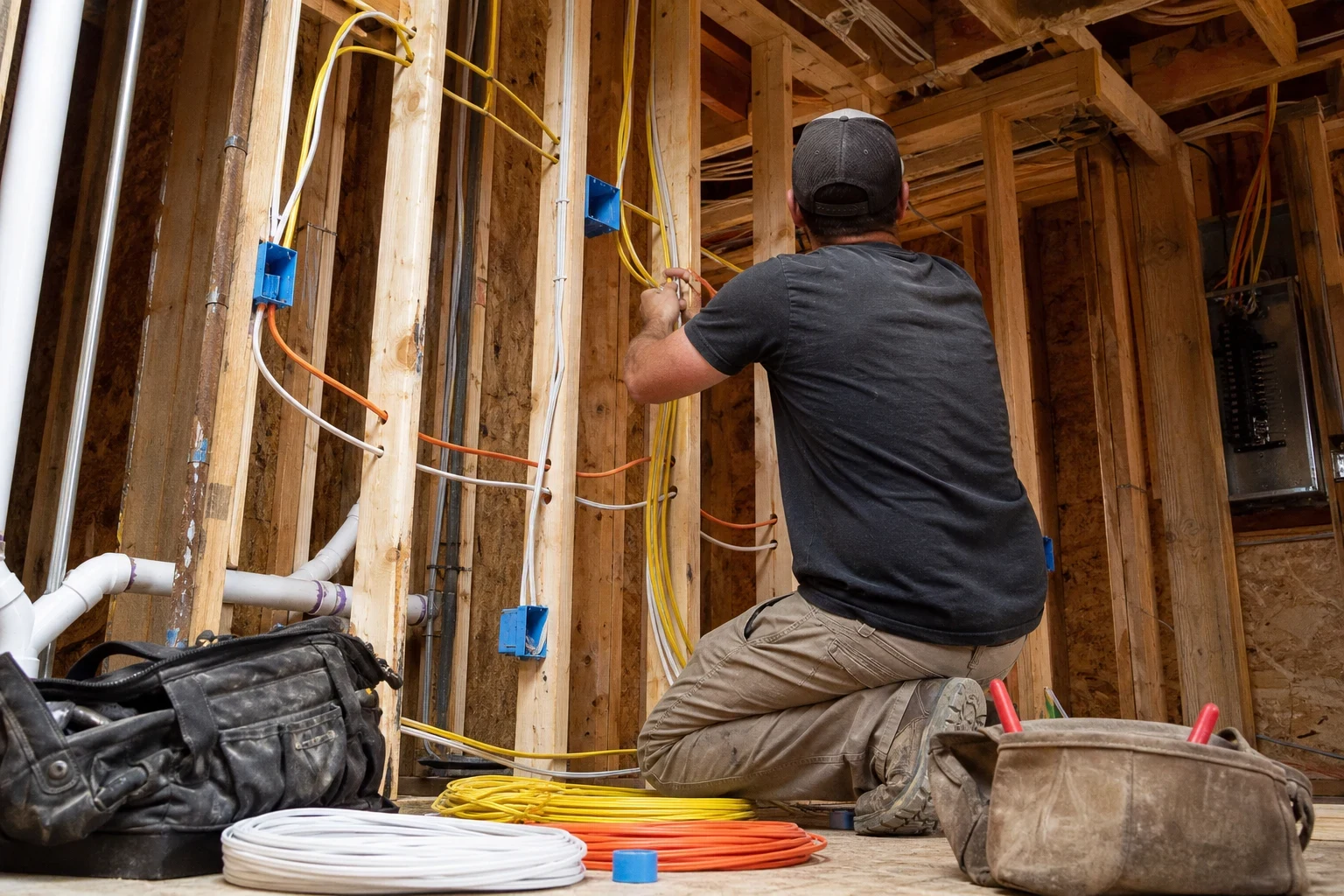
We pull out tired, ungrounded or overloaded wiring and run new copper circuits through your home. Every receptacle goes on its screw terminals, every splice is sized to the wire, and every cable is stapled and protected where it passes framing.
When Rewiring Beats Another Repair
Wiring wears out from the inside. Cloth-sheathed cable dries and cracks after decades of attic heat, two-wire circuits have no ground for modern electronics, and aluminum branch wiring loosens at every connection as it expands and contracts. Once you are fixing the same kind of failure in several rooms, patching one outlet at a time costs more than starting fresh.
A rewire replaces the branch circuits between your panel and every outlet, switch and fixture. We plan the new layout around how you use your home now: more kitchen circuits, dedicated lines for heavy appliances, and outlets where you actually plug things in.
How long a rewire lasts comes down to small things done right. A receptacle pushed into a backstab hole loosens in a few years. One wrapped clockwise around a screw and tightened properly stays put. We work the second way on every device.
What a Rewire Includes
New copper branch circuits
Each circuit gets new grounded NM cable matched to its breaker: 12-gauge conductors where the breaker is rated 20 amps, 14-gauge where it is rated 15. Old cable is abandoned in place or removed where it is accessible and safe to pull.
Boxes sized for the wire
We count conductors and devices for box fill, so splices are not crammed behind a cover plate. Old shallow boxes that cannot hold a grounded device get replaced.
Terminations done properly
Devices go on screw terminals, not backstab holes. Splices use connectors rated for the wire count and gauge, and ground pigtails tie every box and device together.
Cable protection in the framing
Cable is stapled within reach of each box and supported along its run. Where a hole sits close to the edge of a stud, a steel nail plate keeps a future drywall screw out of the conductor.
Code-required protection
New circuits get AFCI and GFCI protection where current code calls for it, including kitchens, baths, laundry and exterior outlets.
Patching after the work
We cut the smallest openings we can to fish cable, then close them with drywall patches ready for your painter.
Signs Your Home Needs Rewiring
- Two-prong outlets throughout
- Ungrounded receptacles mean the circuits behind them have no equipment ground. Adapters and cheater plugs do not fix that.
- Brittle or cloth-covered insulation
- If insulation cracks or crumbles when a fixture is removed, the rest of that circuit is likely in the same shape inside the walls.
- Aluminum branch wiring
- Aluminum circuits from earlier decades loosen at terminals over time. Loose connections heat up, and you may notice warm cover plates or flickering.
- Repeated scorching or buzzing
- Darkened outlets, a burning smell or a buzz at a switch point to failing connections. One is a repair. Several across the house usually means the wiring itself is done.
- Circuits that cannot keep up
- Breakers that trip when the microwave and a space heater run together show a layout built for far less load than you use today.
How a Rewiring Job Runs
- 1
Walkthrough and circuit mapping
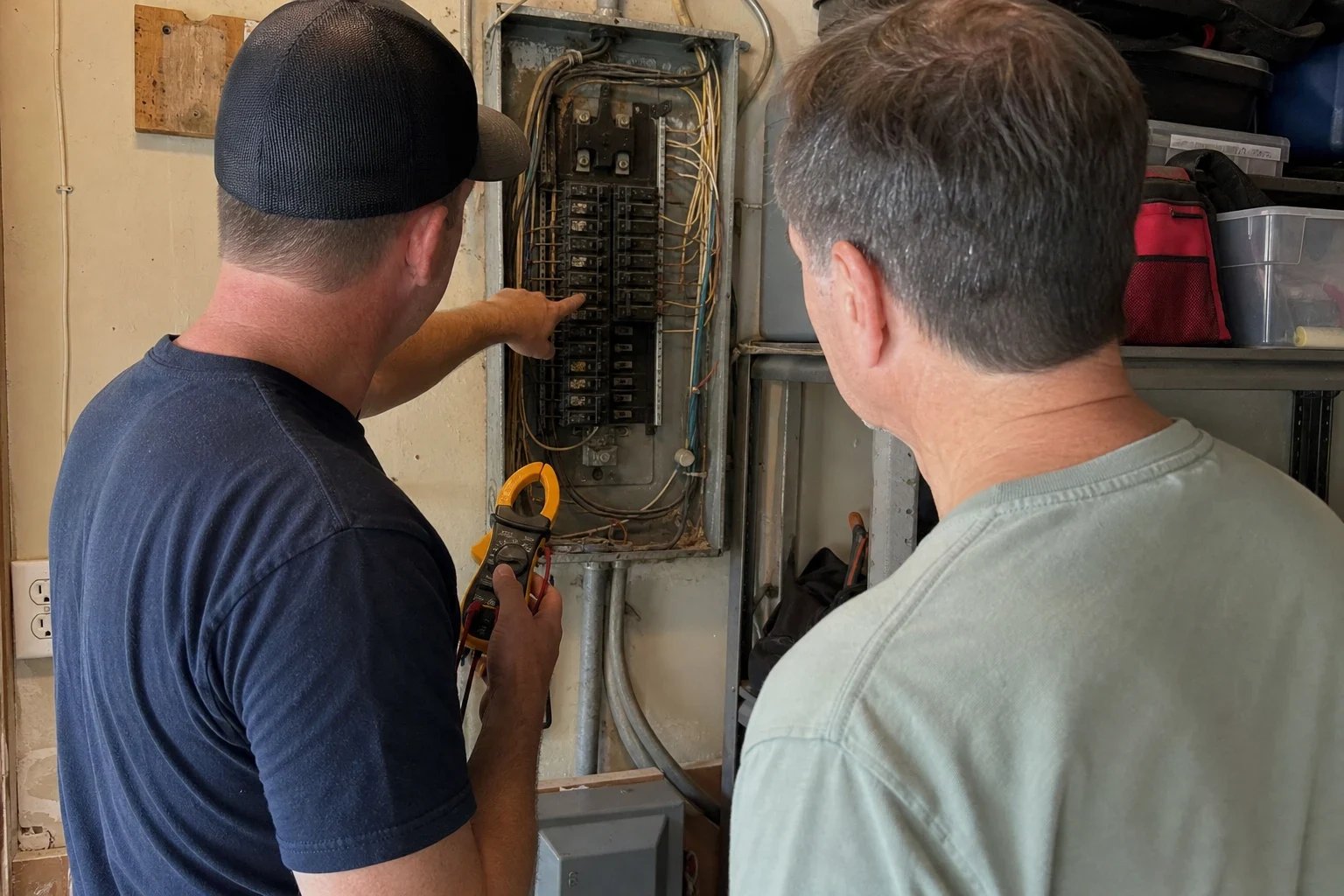
We open sample boxes, check the panel and trace what feeds each room. You get a written scope that lists every circuit we plan to run.
- 2
Permit and scheduling
We pull the permit as the local jurisdiction requires and plan the work room by room, so you keep power in most of your home each day.
- 3
Rough-in
We fish new cable through walls and the attic, set boxes and make up the splices. Furniture and floors are covered where we work.
- 4
Inspection
The rough-in is inspected before walls are closed. We correct anything the inspector flags before moving on.
- 5
Devices, testing and patching
We install receptacles and switches, test each circuit for polarity, ground and AFCI or GFCI function, label the panel and patch our openings.
What Moves the Price of a Rewire
Every rewire is priced from the walkthrough, because no two houses are routed the same way. Your written estimate breaks the job out circuit by circuit, so each line ties back to real work in your walls. The factors below carry the most weight.
- Size and circuit count
- More rooms and more dedicated appliance circuits mean more cable, more boxes and more labor hours.
- Access to the walls
- An open attic makes fishing cable down interior walls simpler. Slab foundations, low rooflines and second floors take more time and sometimes more openings.
- Wall finishes
- Plaster, paneling and shiplap take more care to open and close than standard drywall.
- Panel capacity
- If your panel lacks space or capacity for the new circuits, a panel upgrade may need to be part of the job.
- Permit and occupancy
- Permit fees vary by jurisdiction, and working around an occupied home takes longer than a vacant one.
Rewiring Questions We Hear Most
- Do I have to move out while you rewire?
- Usually not. We work in sections, and before we leave each evening the rooms we finished that day are back on live circuits. Plan on some rooms being without power during working hours and on furniture being moved away from the walls we open.
- How many holes will you cut in my walls?
- As few as the framing allows. We fish cable from the attic and through existing paths where we can, and open the wall only at boxes, fire blocks and tight turns. We patch those openings smooth, and you or your painter handle the final texture and paint.
- How long does a whole-home rewire take?
- It depends on the size of the house, access and the inspection schedule. After the walkthrough we give you a working timeline in the written scope, including when the rough-in inspection should happen.
- Do you pull the permit?
- Yes. We handle the permit and the inspections as your local jurisdiction requires, and we stay on the job until the work passes.
- Can my existing panel stay?
- Sometimes. If it is in good condition with enough capacity and breaker space for the new circuits, we tie into it. If not, we explain why and include a panel upgrade in the scope so you can decide.
Start With a Look Inside Your Walls
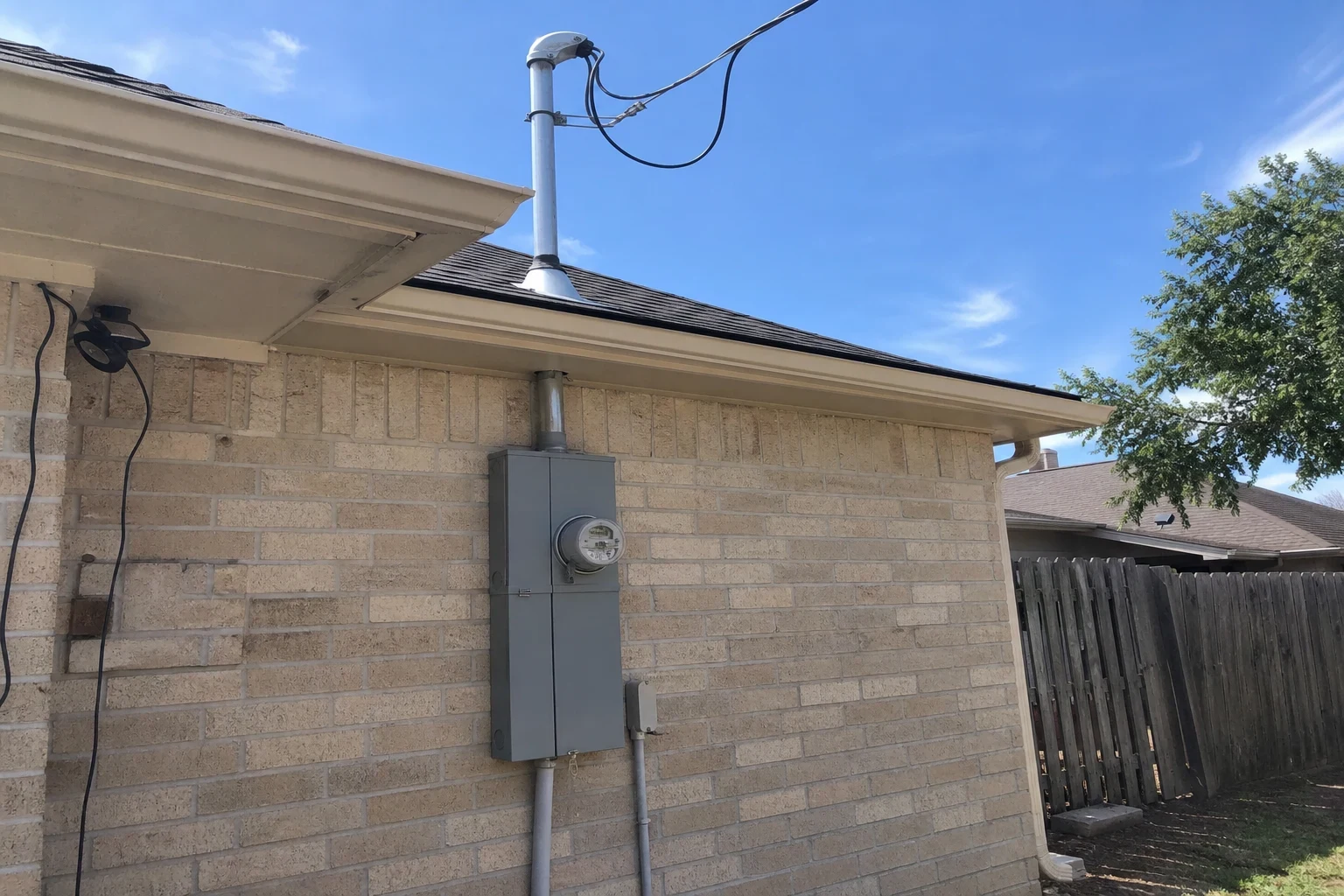
We open sample boxes, map your circuits and give you a written scope for the rewire. You see what we found before any work begins.