ServicesLighting Installation
Lighting Installation in Cleburne
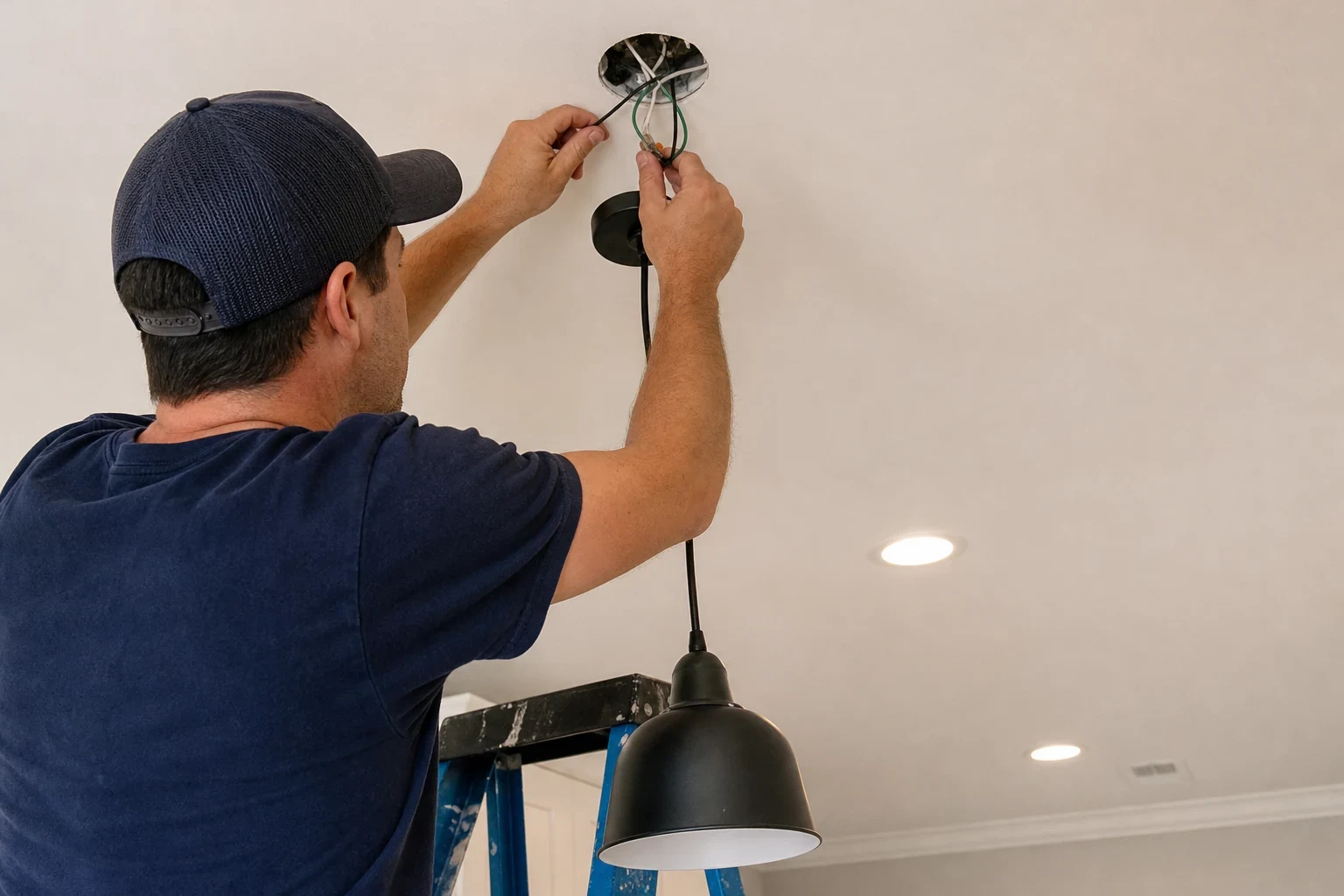
We install recessed lights, pendants, ceiling fans and outdoor fixtures in your home, and we pay attention to the parts you never see: the box rating, the splice, the dimmer match. Those details decide whether a light hums, flickers or works quietly for years.
Good Lighting Starts Above the Ceiling
Most lighting problems we get called about are not bad fixtures. They are a fan hung from a plastic box rated for a 5-pound light, a dimmer built for incandescent bulbs driving LEDs, or wires pushed into backstab holes that loosen as they heat and cool.
Our lighting installation work covers new fixtures, swaps on existing boxes, added recessed lighting, new switch locations and exterior lights. We look at the circuit first: what else is on it, whether a neutral is present in the switch box, and whether the ceiling framing will carry what you want to hang. Then we size the parts to the job instead of the other way around.
What Our Lighting Installation Covers
- Recessed and wafer lighting
- We use IC-rated, airtight housings or canless wafer LEDs where the fixture touches attic insulation. Layout is set from the joist direction and the room's use, so lights land evenly and no hole gets cut into a joist.
- Ceiling fans and heavy fixtures
- Fans and chandeliers go on a fan-rated metal box or an expandable brace fastened to framing. A standard light box flexes under a spinning fan, and that motion is what loosens screws and splices over time.
- Pendants and island lighting
- We set hang heights over counters and tables, center the canopy on the box and level each pendant before the cord or stem is cut to length.
- Switches and dimmers
- We match dimmers to the fixture driver, ELV or TRIAC, and check the LED minimum load so the light dims smoothly instead of buzzing or dropping out. Three-way and four-way runs are wired and tested from every switch.
- Outdoor and porch lights
- Exterior fixtures are wet-location rated, mounted on weather-resistant boxes and sealed at the top edge so water sheds instead of collecting behind the plate. Receptacles we add outside get GFCI protection and in-use covers.
Signs Your Lighting Needs an Electrician
LEDs flicker or buzz on a dimmer
This usually means an older dimmer that was never designed for LED drivers. Replacing the bulb rarely fixes it; the control has to match the load.
A fan wobbles or the canopy shifts
Wobble that balancing kits will not cure often points to a box that is not fan-rated or is not anchored to framing. Left alone, it keeps working the mounting screws loose.
Fixtures run hot or bulbs fail early
Discolored trim, brittle sockets or short bulb life can mean the fixture is over-lamped or trapped under insulation without an IC rating. In a summer attic around Cleburne, that extra heat cuts LED driver life fast.
Rooms that stay dim
One center fixture in a large living room or kitchen leaves corners dark and countertops shadowed. Added recessed or under-cabinet lighting fixes the layout rather than just adding brightness.
Switches in the wrong place
A switch only at one end of a hallway or stair is a safety issue at night. We can add three-way switching so the light works from both ends.
What Moves the Cost of Lighting Installation
A swap on an existing, correctly rated box is a short job. Adding new fixtures where no wiring exists takes more planning and more time. We walk through the scope with you at the visit so the price reflects your ceiling, not a guess.
New wiring or existing box
Replacing a fixture on a sound box is simple. Running new cable for added recessed lights or a new switch leg means fishing wire through finished walls and ceilings.
Attic access and ceiling height
An open attic above a single-story ceiling makes runs quick. Vaulted ceilings, tight attics or second-floor rooms with finished space above add labor.
Fixture count and type
Six wafer lights cost more than one pendant, and a heavy chandelier or fan needs a braced box. Fixtures you supply versus ones we source also changes the total.
Circuit capacity
If the circuit is already loaded, a new run back to the panel may be needed. When the panel itself is full, we will tell you plainly and explain whether panel upgrades make sense.
Permit paperwork
New circuits and some added lighting call for a permit and a follow-up inspection from the city or county. When your job falls into that group, we file for it, meet the inspector and list that step in the scope from the start.
How a Lighting Visit Runs
- 1
Look at the circuit and framing
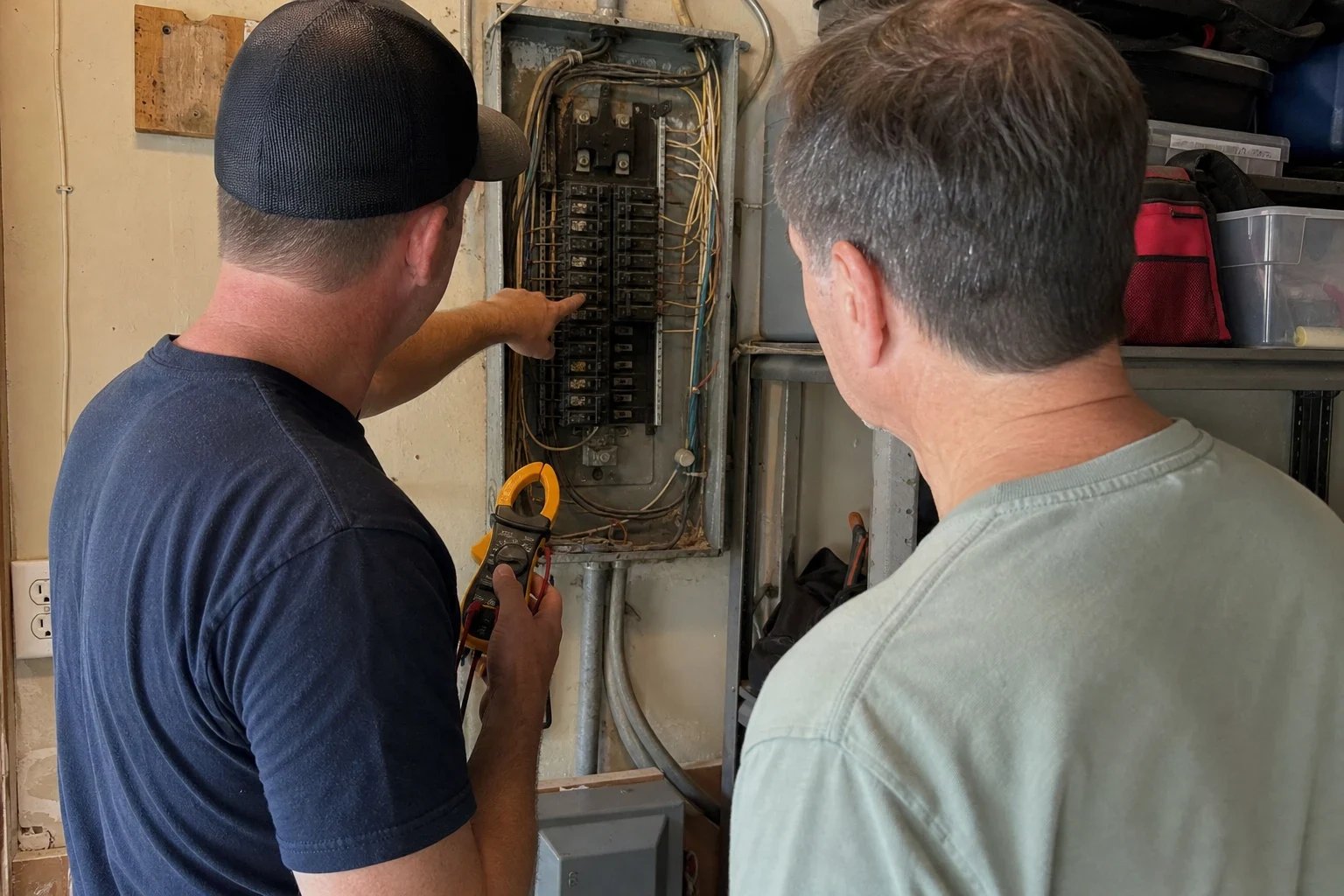
We check the existing boxes, the breaker feeding the room and what else shares that circuit. From the attic or a small access hole we confirm joist direction and insulation type.
- 2
Agree on layout and parts
We mark fixture locations with you, confirm color temperature, often 2700K or 3000K for living spaces, and settle on dimmers. You know what is being installed and why before we start.
- 3
Install and splice
Power is shut off and verified dead at the fixture. Conductors are stripped to the correct length and joined with properly sized wire connectors or lever connectors, ground wires are fastened to metal boxes with a green ground screw, and screw terminals are used instead of backstabs.
- 4
Test and clean up
We test every switch position and the full dimming range, check the fixture is level and tight, and patch small access holes as agreed. Drop cloths come up and drywall dust is vacuumed before we leave.
Lighting Installation Questions
Can you add recessed lights without tearing up my ceiling?
Usually, yes. Canless wafer lights need only a round cutout, and we fish cable between holes from the attic or along the joists. Small access openings sometimes help, and we discuss those with you before cutting.
Can I hang a ceiling fan where my light is now?
Only if the box is fan-rated and secured to framing. Most older light boxes are not. We swap in a fan-rated box or a brace bar, which is a small step that prevents wobble and loose wiring later.
Why do my new LED lights flicker when dimmed?
The dimmer and the LED driver are probably not compatible, or the total load is below the dimmer's minimum. We check the fixture's listed dimmer types and install a matching control, which normally clears it up.
Do you install outdoor and security lighting?
Yes. Porch lights, soffit lights, motion floodlights and post lights are all common. Everything outside is wet-location rated and sealed, since Texas sun and storms are hard on cheap plastic boxes and gaskets.
How long does a lighting installation take?
A few fixture swaps can be done in a couple of hours. A kitchen or living room with new recessed lighting and dimmers is often a full day. We give you a realistic time frame when we see the space.
Can you wire lighting for a remodel or addition?
Yes. For new rooms or opened-up walls, our remodel and addition wiring work lets us place boxes and switch legs before drywall goes up, which is the cleanest way to get the layout you want.
Ready for Lighting That Stays Put and Dims Right
Tell us which rooms you want to light and what bothers you about the current fixtures. We will set up a time to look at the boxes, the circuit and the ceiling, then plan the install with you.