ServicesGenerator Service & Repair
Generator Service & Repair in Cleburne
A standby generator that sits quietly for months has to start, transfer and carry your home the moment the grid drops. We service the engine, the battery and the transfer switch, and we track down the faults that keep a unit from starting or holding load.
What Generator Service Covers and When to Call
Most standby generator failures are not dramatic. A battery that tested fine last spring can no longer crank a cold engine. A loose lug in the transfer switch heats, discolors and finally opens under load. Oil left past its interval thins out, and a spark plug gap that drifted makes the engine stumble when the house load hits it all at once.
We treat the generator and the automatic transfer switch as one system, because that is how it fails. Routine service catches worn parts before an outage finds them. Repair visits start with the controller's fault history and a measured test, not a guess. If the issue is the original install, such as an undersized conductor or a missing grounding connection, we show you what we found and explain the fix. New units are covered on our Generator Installation page.
What a Service Visit Includes
- Battery load test and terminal cleaning
- We load-test the starting battery instead of just reading its voltage, since a battery can show a good number and still drop off under cranking. Terminals get cleaned and protected so corrosion does not add resistance. Long stretches of summer heat shorten battery life, so we note its age and condition.
- Engine maintenance
- We change the oil and oil filter, swap in a fresh air filter, and set each new plug to the electrode gap the maker lists for your engine. Liquid-cooled models also get their coolant level verified and every hose looked over for cracks or softness. Belts are checked for wear, and we watch for oil weeping at the valve cover gasket.
- Transfer switch inspection and torque
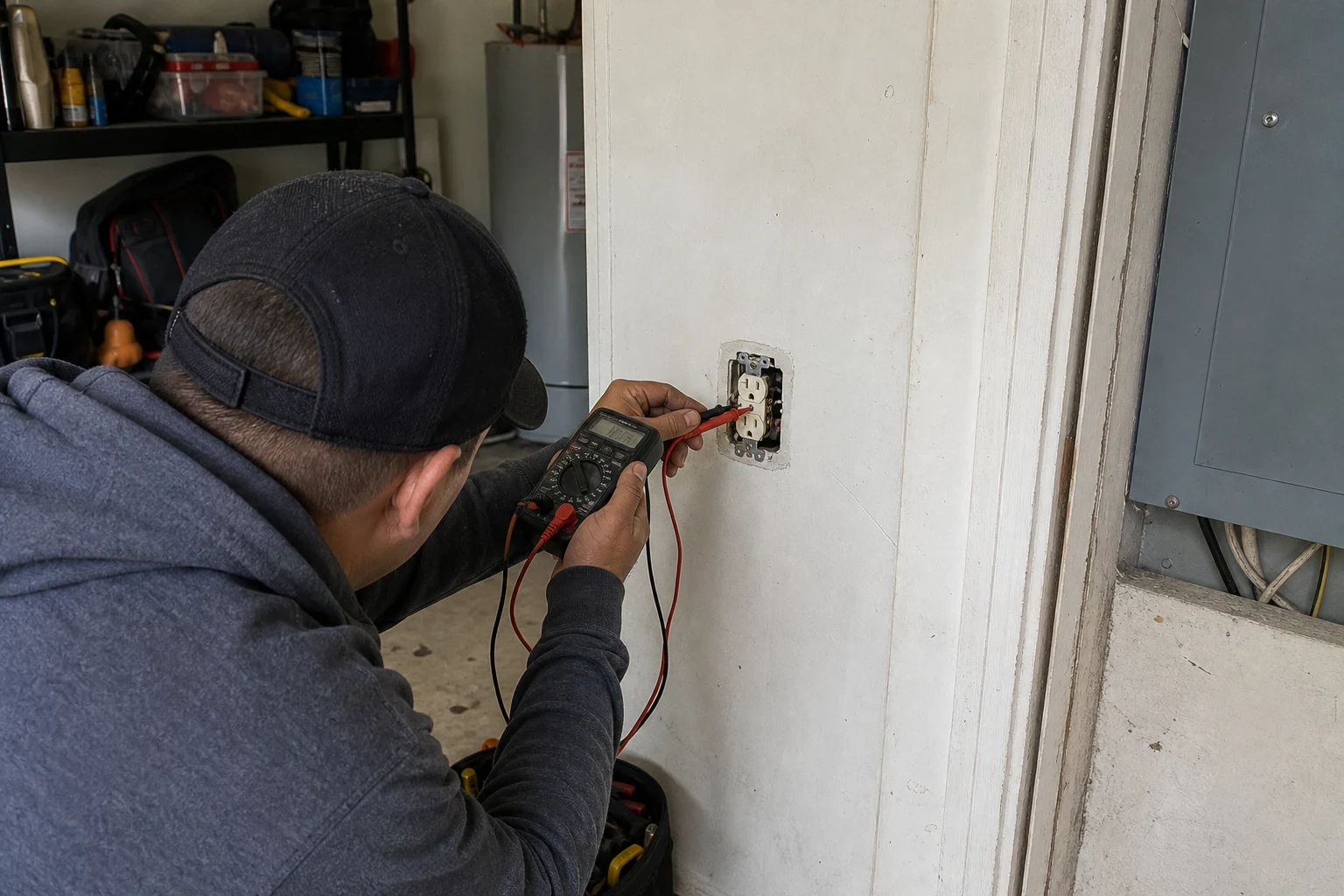
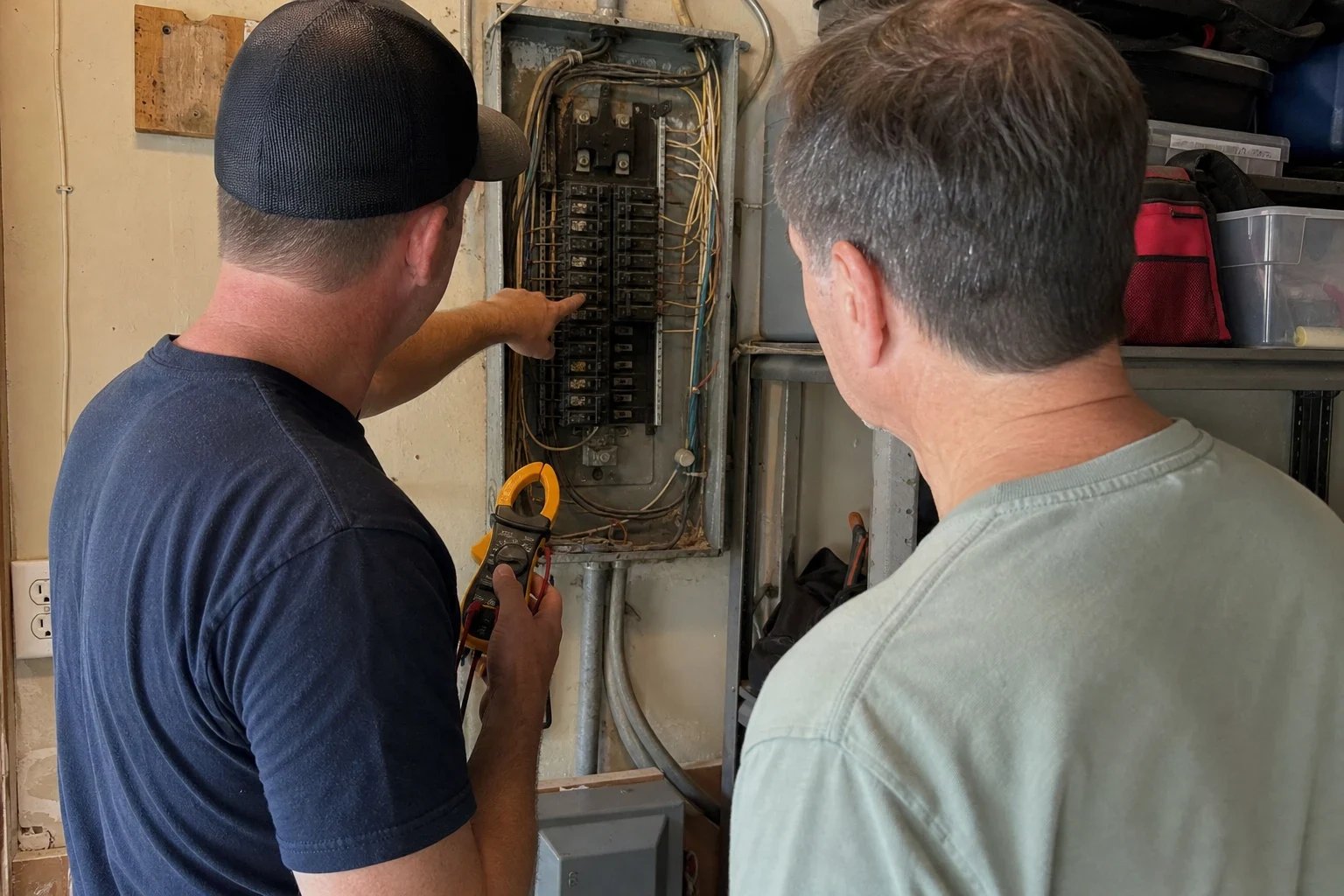
- We open the automatic transfer switch, look for heat discoloration on lugs and contacts, and torque terminations to spec with a calibrated driver. Poor connections are the most common electrical failure point, and they only show up when the switch is carrying load.
- Controller review and exercise settings
- We read stored alarms and fault codes, confirm the controller firmware and clock, and set the weekly exercise cycle so it runs at a sensible time. The log often tells us more than the unit will show during a short visit.
- Live transfer test
- With your approval we simulate an outage, watch the start sequence, measure voltage and frequency at the switch, and confirm the unit picks up your home and transfers back cleanly when utility power returns.
- Enclosure and wiring check
- We look for rodent damage on harnesses, fire ant nests on control boards, and chafed wiring where the conduit enters the unit. Insects packed into contacts can stop a start signal entirely.
Signs Your Generator Needs Attention
It skips its weekly exercise
If you no longer hear the unit run on its scheduled day, the battery, controller or a start relay is usually the cause. Treat it as a failed start, because it is one.
A warning light or fault code
Low oil pressure, overcrank and low battery alarms each point to a different problem. Clearing the code without finding the cause usually means it comes back during an outage.
Rough running or surging under load
Engine speed that hunts or drops when the air conditioner starts can mean a fuel pressure issue at the unit, a dirty air filter or worn plugs. Lights that flicker on generator power often trace to the same cause.
The switch did not transfer
The engine ran but the house stayed dark, or it never transferred back to utility power. That points to the transfer switch, its control wiring or the utility sensing circuit.
Service history is unknown
If you bought a home with a generator already in place and have no record of service, a full baseline visit tells you where it stands.
What Affects the Cost
Routine maintenance is the most predictable visit. Repairs depend on what failed and whether the part is on hand. We explain the cause and the price before any repair work starts.
Unit size and cooling type
Larger air-cooled units and liquid-cooled engines take more oil, filters and time. Liquid-cooled models add coolant and hose service.
Parts needed
A battery, plugs and filters are common stock. Controller boards, starters and transfer switch contactors may need to be ordered for your specific model.
Condition of connections
Heat-damaged lugs or conductors in the transfer switch mean replacing hardware and sometimes a section of wire, not just tightening.
Access to the unit
Fences, landscaping or tight clearances around the enclosure can add time, especially for engine work.
How the Visit Runs
- 1
Booking by phone
When you call, share whatever you know about the unit: the brand, the model number, its kilowatt rating, and any alarm codes or odd behavior you have noticed. With those details we can stock the truck with matching filters, plugs and the parts most likely to be needed.
- 2
Fault history and inspection
We read the controller first, then inspect the engine, battery, enclosure and transfer switch with the unit safely locked out.
- 3
Service and testing
We complete maintenance items, torque connections and run a live transfer test with measured readings at the switch.
- 4
Findings and next steps
You get a plain explanation of what we found, photos of anything worn or damaged, and a clear answer on whether a repair makes sense or the unit is near the end of its life. Nothing beyond the agreed work is done without your approval.
Generator Service Questions
How often does a standby generator need maintenance?
The usual maker's schedule is one visit a year, or earlier once the engine logs a certain number of run hours. A unit that carried your home through a multi-day outage may be due for fresh oil ahead of that. We follow the schedule written for your model and read the hour meter every time we are out.
Do you work on portable generators and interlock setups?
We service the electrical side: the inlet box, the interlock kit at your panel and the connecting cord. That way a portable unit feeds your home safely without backfeeding the utility line.
Can you fix a generator that will not start?
Usually, yes. No-start problems are most often the battery, a blown control fuse, a failed starter or a fault lockout on the controller. We read the codes and test each part of the start circuit until we find it.
Do you service units you did not install?
Yes. Many of our service calls are generators installed by someone else or already in place when the home was bought. We check the original install as part of the visit.
Does the weekly exercise run mean my generator is fine?
Not entirely. Most exercise cycles run the engine without carrying any load, so a weak transfer switch connection or a fuel delivery problem under load can go unnoticed. A live transfer test is the only way to know.
Get Your Generator Ready Before the Next Outage
We will service the engine, test the battery under load and torque every connection in the transfer switch. Serving Cleburne, Burleson, Joshua and the surrounding area.