ServicesPanel Upgrades
Panel Upgrades in Cleburne
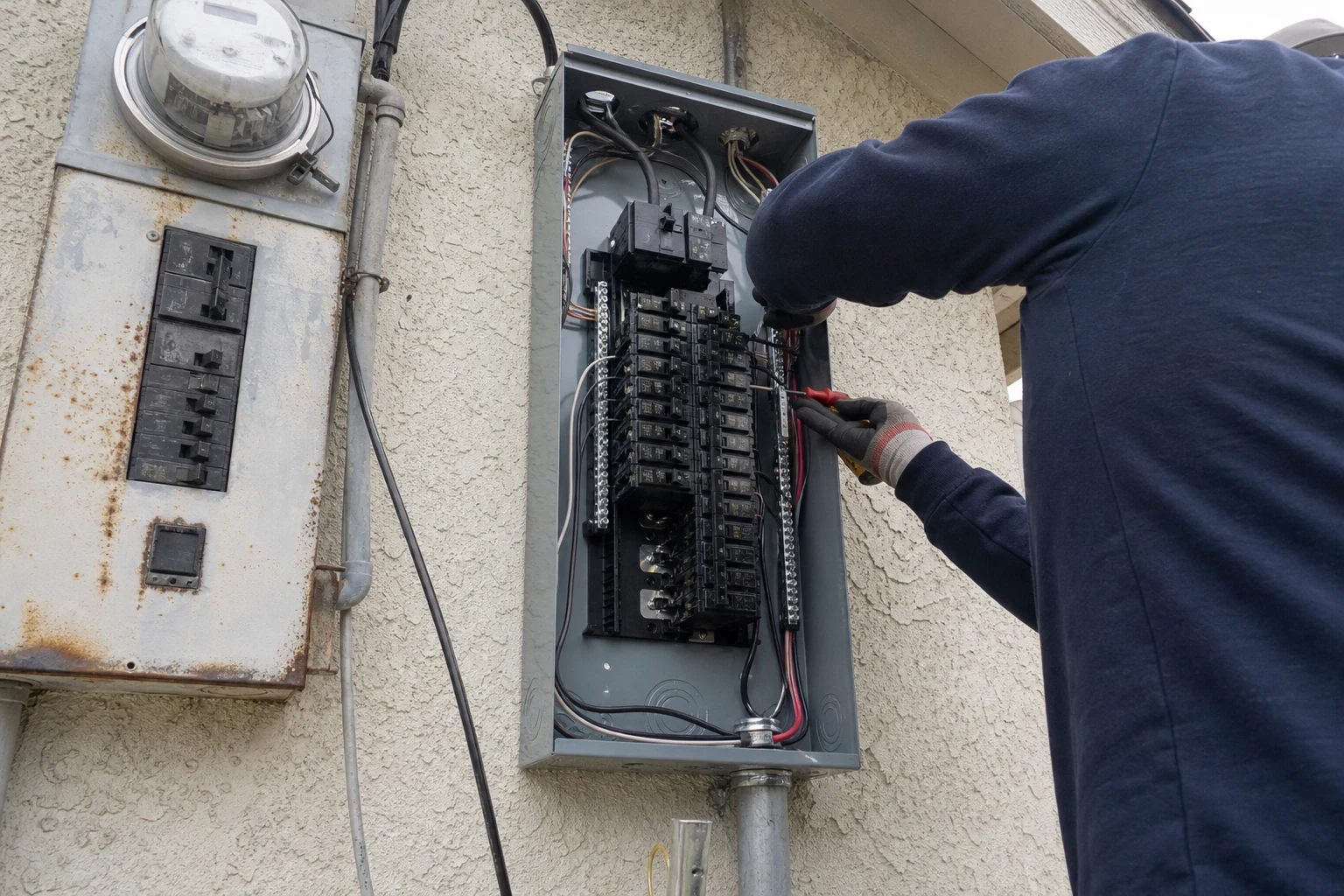
We replace tired or undersized electrical panels with a new load center sized to what your home really draws. Every lug is torqued to the maker's spec, every circuit is labeled, and the permit and inspection are handled as your jurisdiction requires.
What a Panel Upgrade Covers
A panel upgrade replaces the load center where your service enters your home and splits into branch circuits. Often it also means raising the service size, commonly from 100 amps to 200, and replacing a worn meter base or service entrance cable along with it. It is the right call when the panel can no longer carry your load safely, when it has run out of breaker spaces, or when it is a model with a poor track record.
Most panels that fail do not fail all at once. They fail at a connection: a lug that was never tightened to spec, an aluminum conductor with no antioxidant compound, a breaker whose clip has lost its grip on the bus bar. Heat builds at that one point for years. Our approach is built around those small details, because they decide whether a new panel lasts decades or starts scorching in five years.
What We Do on a Panel Upgrade
Load calculation before sizing
We add up your HVAC, range, water heater, dryer and any planned EV charger or well pump. The result tells us whether a straight swap is enough or the service size needs to go up.
Calibrated torque on every termination
Main lugs, neutral bar screws and breaker terminals are tightened with a calibrated torque screwdriver or wrench to the values printed on the panel label. Guessing by feel is how loose connections start.
Proper aluminum conductor prep
Aluminum service conductors are wire-brushed and coated with antioxidant compound before landing. That stops the oxide layer that raises resistance and heats the lug over time.
Grounding and bonding verified
We follow the grounding conductor from the panel out to the rods in the yard and confirm the metal water line is bonded. Anything loose, missing or undersized gets fixed before the cover goes back on. At any subpanel, neutrals and equipment grounds stay on their own separate bars.
Clean routing and a real directory
Conductors are dressed neatly with proper bending space and listed connectors at each knockout. You get a typed circuit directory that matches what each breaker actually feeds.
Signs Your Panel Is Due for Replacement
- Breakers warm to the touch
- A breaker or panel cover that feels hot points to a high-resistance connection or an overloaded circuit. That heat breaks down insulation and the breaker itself.
- A known problem brand
- Federal Pacific Stab-Lok and Zinsco panels have long histories of breakers that fail to trip. If your home has one, replacement is usually the honest recommendation.
- No room for new circuits
- If the panel is full of tandem breakers or you need spaces for a new circuit, a larger load center is often cleaner than stacking more onto an old one.
- Main breaker trips in summer
- When the main trips on hot afternoons with the AC running hard, your service may be too small for the load your home now carries.
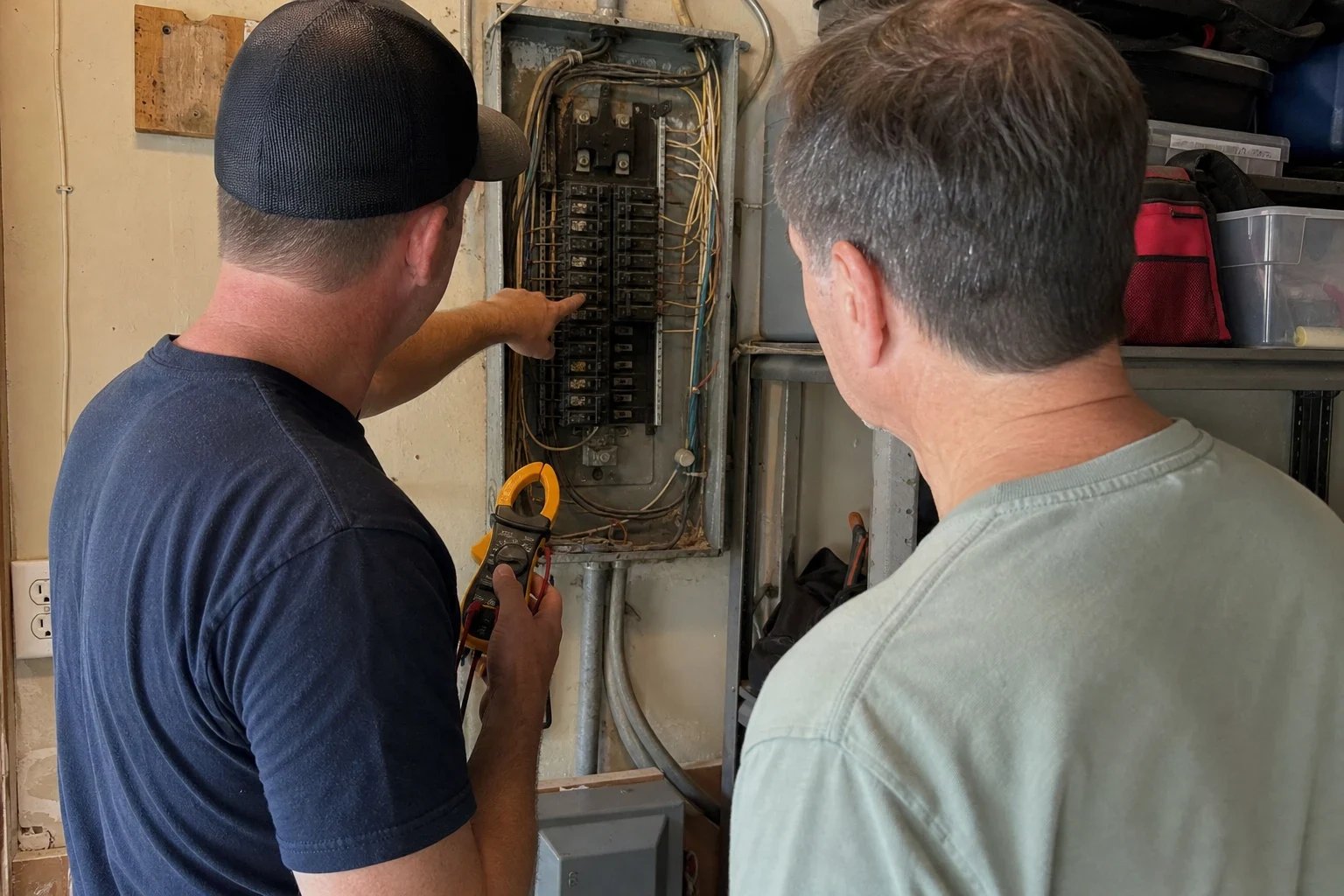
- Rust, scorch marks or a buzzing sound
- Corrosion inside the enclosure, darkened bus bars or a steady buzz are signs of failing connections. Turn off what you can and get it looked at.
- Fuses instead of breakers
- An old fuse box was built for far smaller loads than most homes run today, and some insurers ask about it.
How a Panel Upgrade Runs
- 1
Service visit and assessment
We open the panel, check the meter base, service entrance and grounding, and run the load calculation. You get a written scope that says what will change and why.
- 2
Permit and utility scheduling
We pull the permit as required by your local jurisdiction and coordinate with your electric utility for the disconnect and reconnect. You get a date for the power-off day.
- 3
Changeover day
Once the utility has cut service, we remove the old enclosure and mount the new load center in its place. Each circuit is landed and every termination torqued, AFCI or GFCI protection goes in wherever code calls for it, and the directory gets labeled.
- 4
Inspection and walkthrough
The inspector reviews the work, then the utility restores service. We test each circuit, show you the main and the directory, and clean up before leaving.
What Moves the Price of a Panel Upgrade
No two panel jobs cost the same, because what sits behind the old cover varies so much. We price after a service visit, once we have seen the meter base, the grounding and the existing wiring. Here is what usually makes the biggest difference.
- Service size
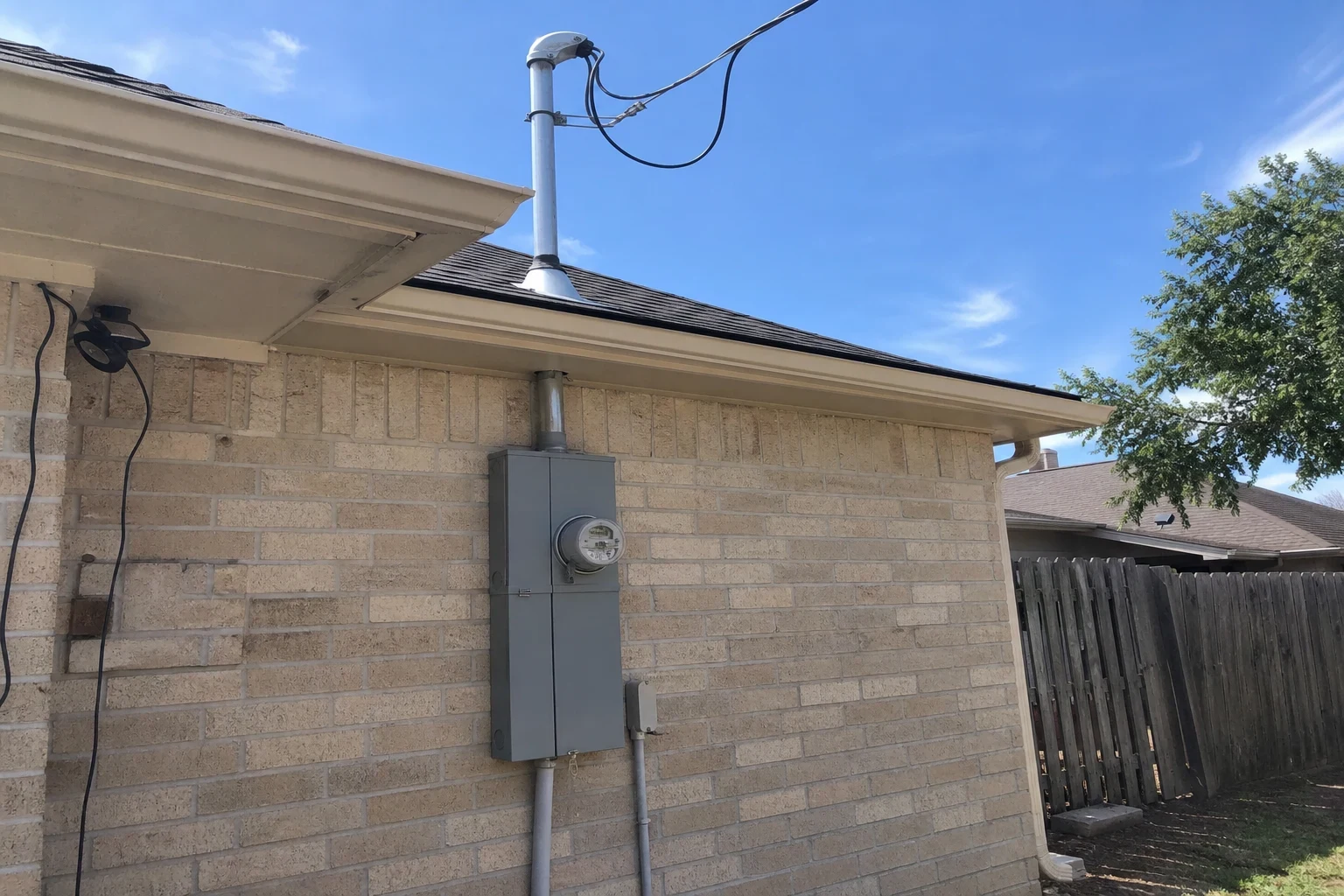
- A same-size swap costs less than raising the service, which can mean a new meter base, larger conductors and more utility coordination.
- Meter base and service entrance condition
- A weathered meter base or cracked service entrance cable has to be replaced along with the panel.
- Panel location
- Relocating a panel out of a closet or bathroom, or working in a tight garage wall, adds labor and materials.
- Code-required breakers
- Current code may require AFCI or GFCI breakers on many circuits, and those cost more than standard breakers.
- Grounding corrections
- Missing ground rods, an absent water pipe bond or undersized grounding conductors add to the scope.
Common Questions About Panel Work
- How many hours will we be without electricity?
- A straightforward panel swap usually leaves your home without power for the better part of a single workday. Going up in service size or replacing the meter base can add time. Before the job, we tell you the expected outage window so you can plan around meals, work and the refrigerator.
- Do you pull the permit?
- Yes. We pull the permit as required by your local jurisdiction and schedule the inspection. The utility will not reconnect a new service until the work passes.
- Do I need 200 amps for an EV charger?
- Not always. A load calculation shows whether your current service has room for a dedicated charger circuit. If it does not, we can upgrade the panel and handle the EV charger installation together.
- Can you reuse my existing breakers?
- Usually not. Breakers are listed for specific panel brands and bus designs, so new panels get new matching breakers. Mixing brands can lead to poor bus contact and heat.
- Should I add surge protection while the panel is open?
- It is a good time. A whole-home surge protective device mounts at the panel, so adding it during the upgrade saves a second visit. Ask about our surge protection service when you call.
- Will a new panel support a generator or battery later?
- We can size it with that in mind and leave room for a transfer switch or interlock. That makes later generator installation or home battery backup systems simpler.
Ready to Replace an Aging Panel?
Tell us what your panel looks like and what you plan to add. We will set up a visit to assess the panel, run the load calculation and walk you through the scope.