ServicesSurge Protection
Surge Protection in Cleburne
A surge device mounted at your panel guards everything wired into your home, and plug-in units give sensitive electronics a second layer. How well it works comes down to lead length, breaker position and the ground behind it, and those details get our full attention.
What a Surge Device Does, and Why the Install Matters
A surge protective device, or SPD, sits between your wiring and ground. When voltage spikes, metal oxide varistors inside it clamp the excess and send it to ground before it reaches the circuit boards in your HVAC control, refrigerator, washer and TV. Some surges come from lightning and utility switching. Many start inside your home, every time an air conditioner compressor or well pump cycles on and off.
Most of an SPD's performance is lost or kept in the last few inches of wire. Every extra inch of lead adds impedance, which raises the voltage that gets past the device. We mount it close to the breaker it lands on, keep the conductors short and straight with no coils, and confirm the grounding electrode system is solid. A good device on a poor ground protects very little.
What Our Surge Protection Work Includes
Type 2 panel-mounted SPD
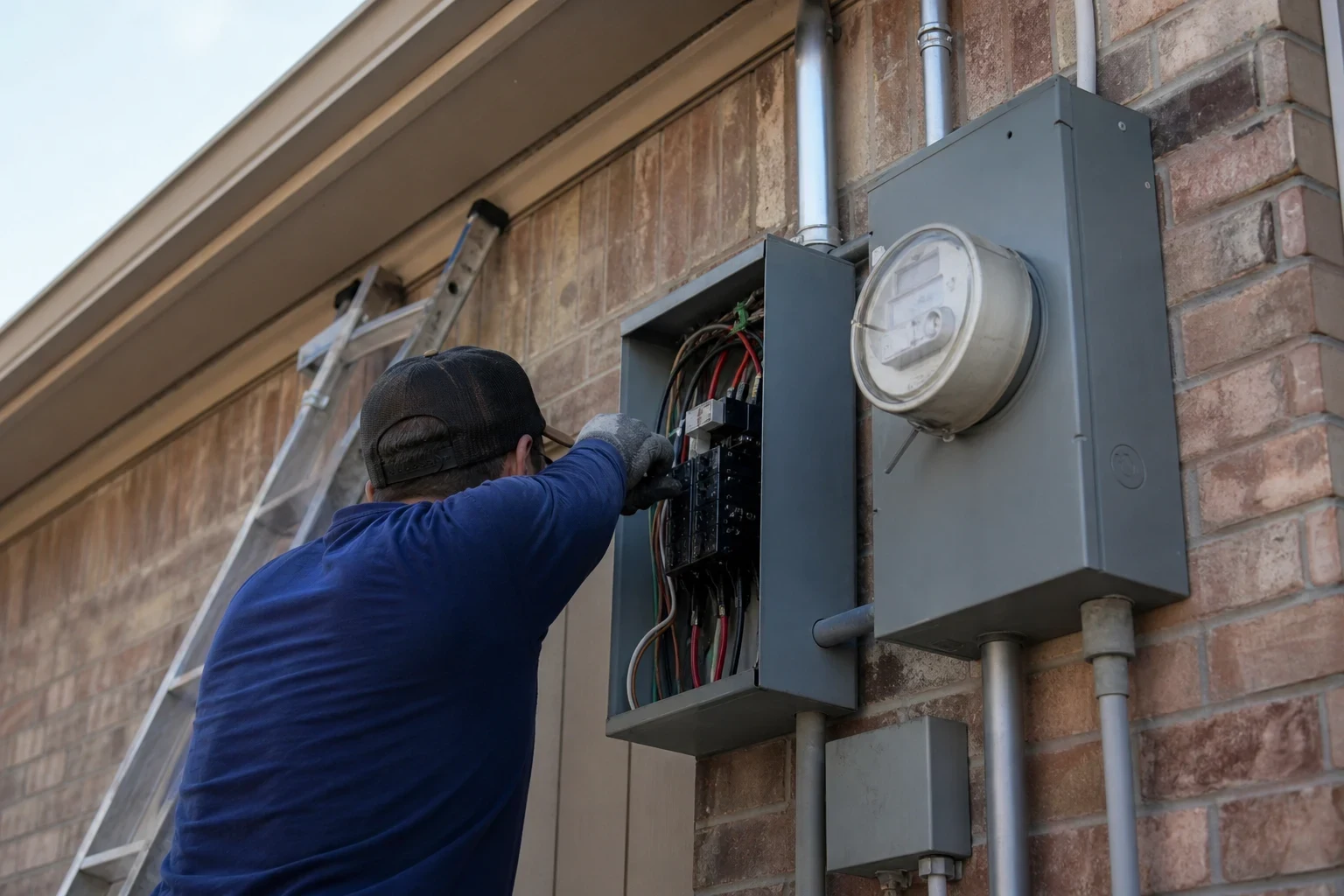
We install a whole-home device on the load side of your main breaker, landed on a dedicated double-pole breaker near the top of the bus. That position shortens the path and keeps leads as short as the enclosure allows.
Grounding and bonding check
Before the SPD is trusted with anything, we follow the conductor from your panel out to the ground rod, look at the clamp where it attaches and confirm the main bonding jumper is in place. Corroded rod clamps and loose lugs turn up often, and we fix them first.
Bonding of cable and phone lines
Coax and phone lines entering your home should bond to the same grounding system as the electrical service. If they are grounded somewhere else, a surge can travel between systems through your equipment, so we tie them together where we can reach them.
Point-of-use protection advice
For computers, home theater gear and network equipment, we recommend Type 3 plug-in protectors as a second layer. The panel device takes the big hit and the plug-in unit handles what remains.
Labeling and a status walkthrough
We label the SPD breaker and show you the indicator lights, so you know what a healthy device looks like and when it needs replacing.
Signs Your Home Needs Surge Protection
- Electronics failing after storms
- A dead garage door opener, router or TV after a thunderstorm usually means a surge got through. Spring storms around Cleburne make this a pattern worth stopping.
- Control boards dying early
- Repeated failures in HVAC boards, appliance controls or LED drivers often trace to small, frequent surges that wear electronics down over months.
- No SPD in your panel
- Open the panel door. If you see no surge device on a breaker or mounted beside the enclosure, your home has no whole-home protection.
- An old device with a dark indicator
- MOVs wear a little with every surge they absorb. A green light that is out or a red light that is on means the device has spent itself and offers no protection.
- New panel, generator or EV charger
- When you add expensive equipment or replace your service, it is the right time to add surge protection. The panel is open and the grounding is already being checked.
How a Surge Protection Visit Runs
- 1
Look at the panel and ground
We check panel space, bus condition and the grounding electrode system first. If the ground connection is loose or corroded, we tell you and fix it as part of the job.
- 2
Pick the location and breaker
We choose a breaker slot close to where the SPD will mount, usually near the main. Shorter leads mean lower let-through voltage, so this step gets real attention.
- 3
Install and dress the leads
Power is shut off, the device is mounted, and leads are cut to length and run straight to the breaker, neutral and ground bars. Connections are torqued to the manufacturer's specification.
- 4
Restore, test and explain
We restore power, confirm the indicator shows normal status, label the breaker and walk you through what to watch for. Permits and inspections are handled as required by your local jurisdiction.
What Moves the Cost of Surge Protection
Most surge installs are simple jobs. Two things set the number: how much room your panel has and what shape the grounding is in. We check both during the visit, then go over each line of the estimate with you.
- Panel space
- A panel with open slots near the main is the simplest case. A full panel may need tandem breakers or reworked circuits to make room.
- Grounding condition
- Replacing a corroded rod clamp is small work. A missing or undersized grounding electrode conductor adds labor and material.
- Device rating and type
- SPDs vary in surge current rating and in whether they offer replaceable modules. We match the device to your home's service and the equipment you're protecting.
- Added point-of-use units
- Plug-in protectors for electronics are an optional second layer and are priced separately.
- Combining with other work
- Adding an SPD during panel upgrades or generator installation costs less than a separate trip, since the panel is already open.
Surge Protection Questions
- Does a whole-home surge device replace my power strips?
- No. The panel device handles large surges coming in from the utility and from big motor loads. A good plug-in protector still helps sensitive electronics by catching the smaller residual spike. Each layer covers what the other one misses.
- Can a surge device stop a lightning bolt that hits the house?
- Nothing mounted in a panel can fully absorb a strike that lands directly on your roof. Where an SPD earns its place is on the much more frequent surges from strikes nearby and from utility switching. Those are the events behind most fried electronics.
- How long does installation take?
- A standard panel-mounted install with a healthy ground usually takes a few hours, including testing. Grounding repairs or making room in a full panel can add time, and we tell you that up front.
- Do surge protectors wear out?
- Yes. The MOVs inside degrade each time they clamp a surge, and a large event can use one up at once. Check the indicator light a few times a year and after big storms, and replace the device or module when it shows a fault.
- Should I add surge protection with a generator or battery system?
- It's a good pairing. Generators and battery inverters contain electronics that are sensitive to spikes, and transfer events can create transients. We often install the SPD during generator installation or home battery backup systems work.
Protect the Electronics Already in Your Home
We'll look at your panel and grounding, then install a surge device with short, clean leads that does its job. Book a service visit and we'll set a time that suits you.