ServicesCode Corrections
Code Corrections and Inspection Fixes in Cleburne
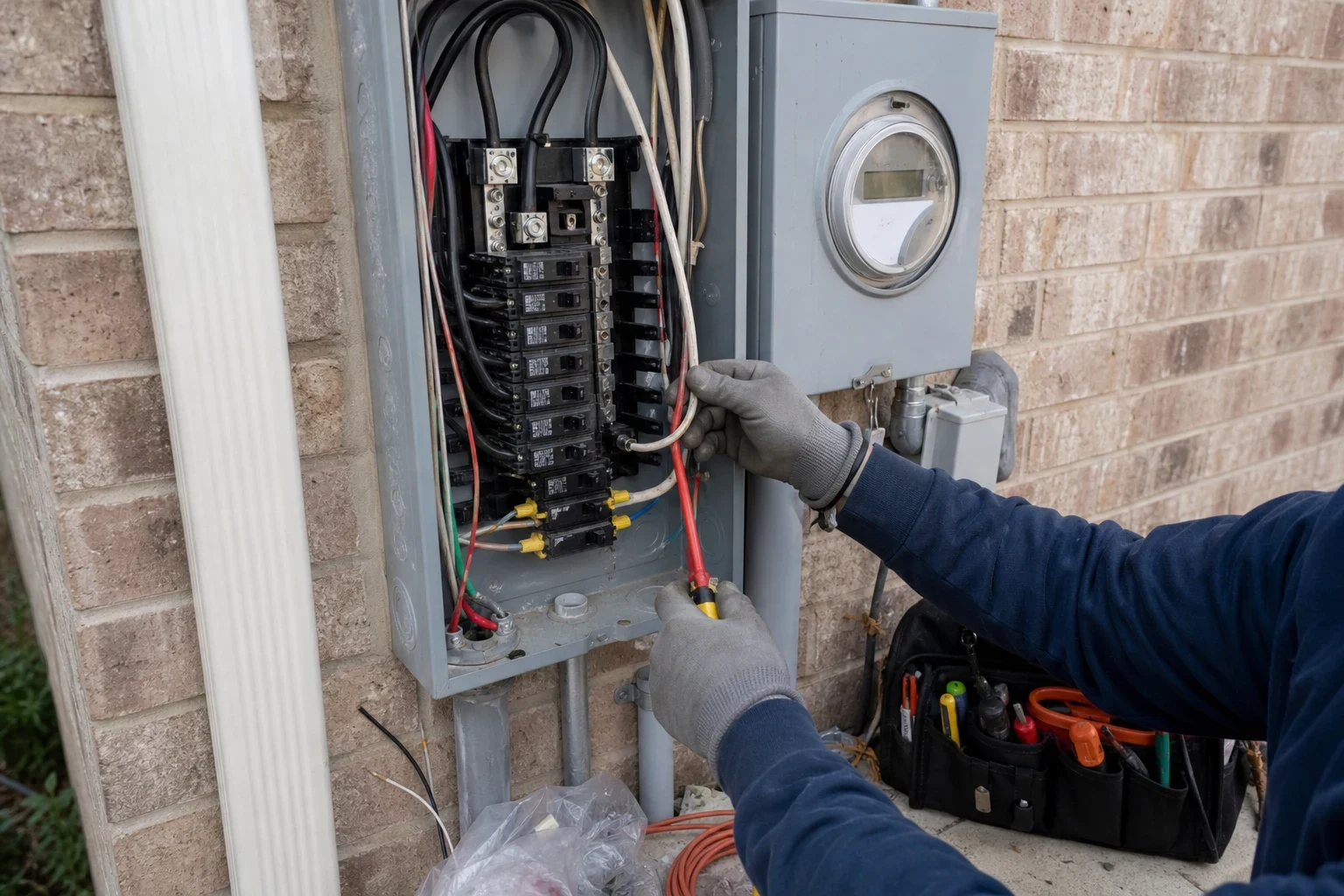
An inspection report tells you what failed. We find out why, correct each item with the right listed part installed the right way, and give you written notes and photos so the next inspector can sign off without guessing what changed.
Fixing the Cause Behind Each Line on the Report
Most inspection notes describe a symptom. "Open ground at bedroom receptacle" might be one loose pigtail behind a single device, or it might be an ungrounded two-wire circuit feeding the whole room. We trace each item back to where it starts and correct it to the code edition your local jurisdiction enforces.
This is the right service when a home inspector flagged electrical items before a sale, when a permit inspection failed, or when you've found work from a previous owner that doesn't look right. A lasting correction comes down to small choices: a connector listed for the wire it holds, a breaker sized to the conductor, a box with enough cubic inches for every splice inside it.
If an item points to something bigger, like a panel that can't accept the breakers it needs, we tell you plainly and explain the difference between a fix and a replacement.
Common Corrections We Make
- Double taps and mismatched breakers
- Most breaker terminals are built to clamp a single wire, and inspectors flag it almost every time two wires share that screw. We separate them with a proper pigtail or a listed tandem breaker where the panel allows it. We also catch 20-amp breakers protecting 14-gauge wire and resize them to match.
- GFCI and AFCI protection
- Kitchens, bathrooms, garages, laundry areas and outdoor receptacles call for ground-fault protection, and some living spaces need arc-fault protection once their circuits are modified. We choose a device or breaker that matches your panel's listing. Then we press the test button and use a tester to prove each one actually trips.
- Grounding and bonding
- We check the grounding electrode conductor, the clamps at the ground rod and the bonding of metal water and gas piping. Ungrounded three-prong outlets get either a new equipment ground or GFCI protection with the required "No Equipment Ground" label.
- Boxes, splices and cable support
- Open junction boxes, splices taped up in an attic, missing cable clamps, overfilled boxes and loose cable runs all get corrected. Splices go into covered, accessible boxes with the right connectors.
- Panel labeling and dead-front screws
- We write an accurate circuit directory for the panel door and swap out missing or wrong dead-front screws. Pointed sheet-metal screws can nick a conductor behind the cover, so we use the blunt screws the panel was designed for.
- Outdoor fittings
- Outdoor receptacles get weather-resistant devices and in-use covers. Cracked conduit fittings and cable jackets broken down by years of Texas sun get replaced instead of taped.
When You Need Code Corrections
A home inspection before closing
Buyers' inspectors often list several electrical items at once. We work through the list so the sale isn't held up by small items.
A failed permit inspection
If an inspector failed work on your home, the correction notice spells out what must change before they'll return.
Odd readings from a plug-in tester
Reverse polarity or open ground lights usually mean a wiring mistake at the outlet or upstream, not a bad device.
Previous owner wiring
Outlets added off a lighting circuit, cable stapled loosely across attic joists or splices with no box are worth correcting before they cause a problem.
An insurer or buyer asking for corrections
Sometimes the request is for a specific list of fixes and proof they were done. We provide both.
What Sets the Cost of a Correction Visit
Each flagged item gets its own line on a written estimate, and we set that number only after looking behind the cover. Six lines on a report might take an hour or most of a day, because the causes decide the time, not the count. Nothing starts until you approve the estimate.
What the cause turns out to be
A loose pigtail is a quick fix. A room with no equipment ground at all means running new conductors or adding GFCI protection across the circuit.
Access
Items in an open garage go faster than ones behind finished drywall or deep in an attic, where summer heat limits how long anyone can safely work.
Panel brand and age
AFCI and GFCI breakers must be listed for your panel. Some older panels have limited or costly breaker options.
Permits and reinspection
Some corrections need a permit and an inspector's return visit, which adds time and fees set by the jurisdiction.
How a Correction Visit Runs
- 1
Read us the list by phone
When you book, tell us which items were flagged, who flagged them and any deadline you're working against. That helps us bring the right breakers and parts.
- 2
Verify each item on site
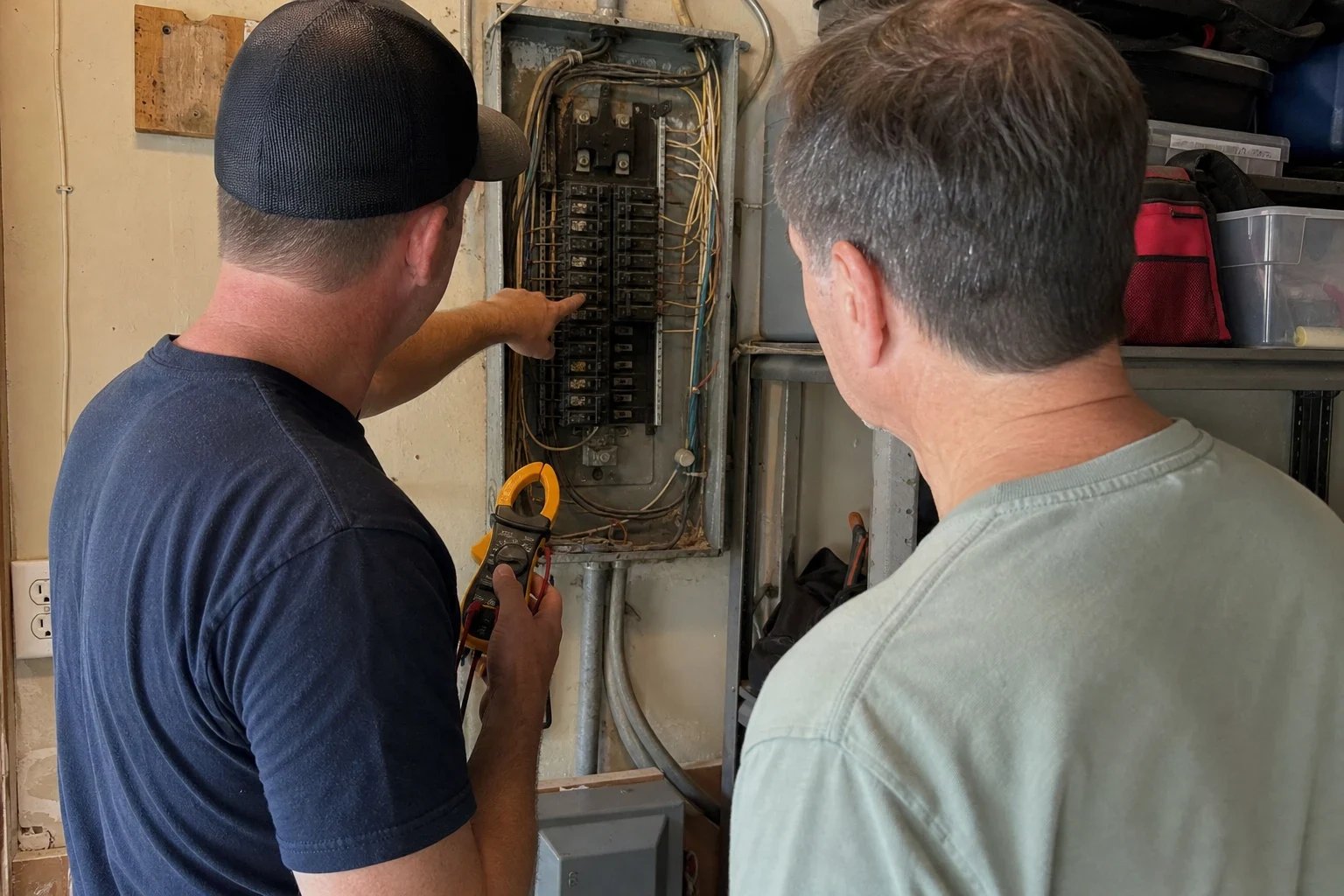
We open the boxes and the panel, test with a meter and confirm the cause behind every note. You get a written price for each item before we change anything.
- 3
Make the corrections
We install listed parts, torque terminals to the manufacturer's specification and test each circuit we touched. Anything we open gets closed up and cleaned up.
- 4
Document for reinspection
You receive item-by-item notes and before-and-after photos. Where a permit or reinspection is required, we handle it as your local jurisdiction requires.
Questions About Code Corrections
Can you fix just the items on my inspection report?
Yes. We work from your list and price each item separately. If we spot something unsafe that wasn't listed, we point it out and let you decide.
Do you pull permits for correction work?
When the work requires one, yes. Permits and inspections are handled as your local jurisdiction requires. Many small items, like replacing a device or adding a cover, may not need a permit at all, and we'll tell you which is which.
Will the buyer's inspector accept your corrections?
We can't speak for another inspector, but we make it easy for them. Each item gets a written note and photos showing what was found and what we installed, so nothing has to be taken on trust.
We close soon. Can you fit the work in?
Tell us your closing date when you book and we'll be straight about whether the schedule works. Reading us the report details on the call lets us arrive with parts in hand, which saves a return trip.
What happens if one item turns out to be a larger problem?
Our work stays within the items you approved. We show you what we found behind the cover, explain why it goes past a simple correction and walk through your options, which may include a panel upgrade or whole-home rewiring. You make the call before anything more is done.
Clear the Electrical Items Off Your Report
Have your inspection report handy when you call. We'll go over the items, set a time to come out and fix each one so it holds up.