ServicesGenerator Installation
Generator Installation in Cleburne
Backup power in your home depends on what happens between the generator and the panel. We size standby units and portable inlet setups from a load calculation, then finish with torqued, sealed terminations so the system carries the right circuits through outage after outage.
What Generator Installation Covers
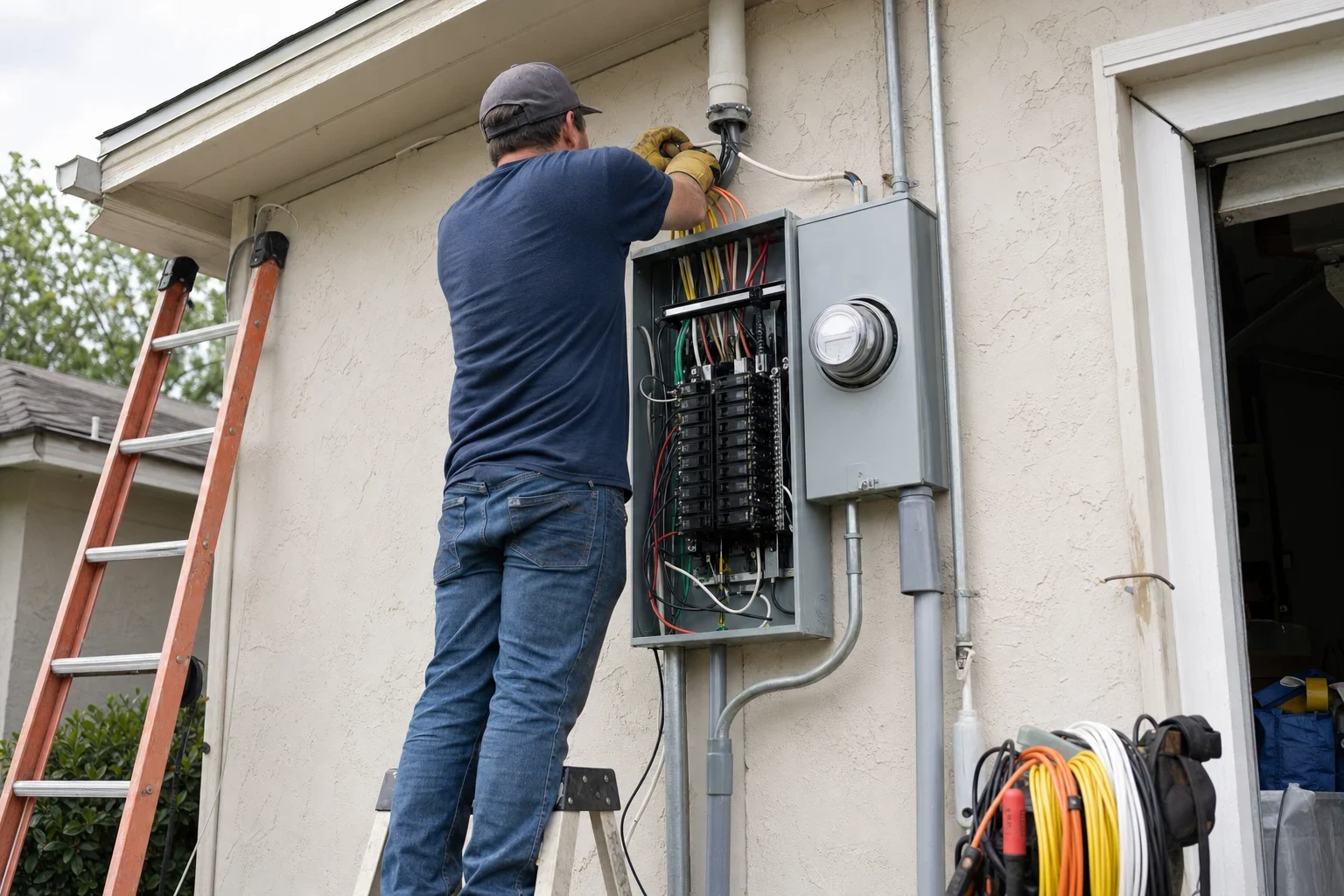
A generator is only as reliable as the wiring between it and your panel. We size the unit to your real loads, pick the right transfer switch for your service, and set the generator where exhaust, airflow and service access all work. Then we run the conductors, make every termination to the manufacturer's torque value, and handle the permit and inspection as required by the local jurisdiction.
Most of the failures we see on other installs are not engine problems. They are a loose lug at the transfer switch, a conduit that cracked where it met a vibrating unit, or a pad that settled and tilted the enclosure. Those come down to how the job was put together, and that is where we spend our time.
If you want quiet, fuel-free backup for a few circuits instead, see our Home Battery Backup Systems page. For upkeep on a unit you already own, see Generator Service & Repair.
What's Included in the Install
- Load calculation
- We add up what you want to run, including the starting surge of an AC compressor or well pump, which can be several times its running draw. That number sets the generator size and tells us whether a whole-home or essential-circuits setup makes sense.
- Transfer switch selection
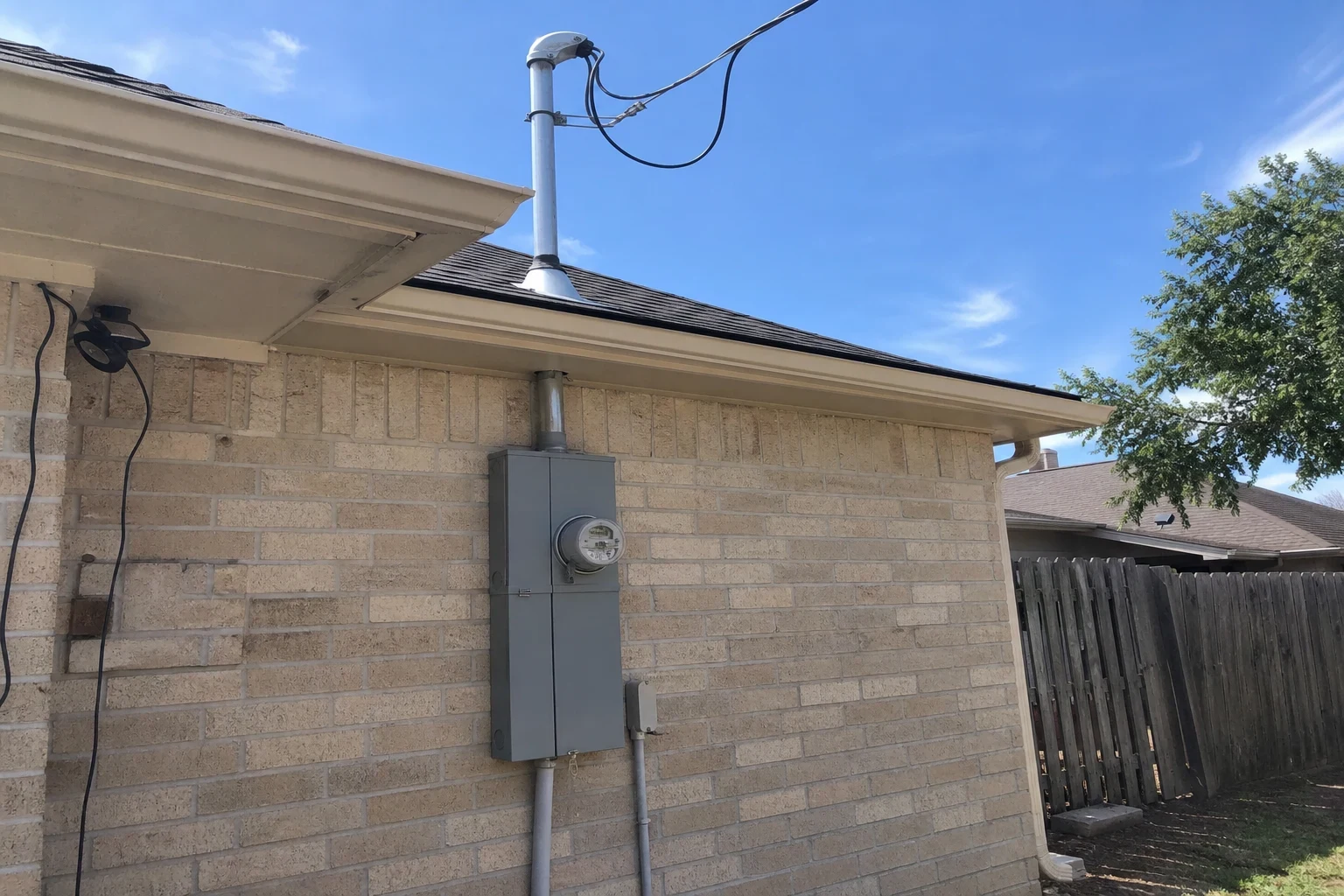
- An automatic transfer switch is either service-rated, sitting between the meter and your panel, or installed after the main breaker. The choice affects how neutrals and grounds are separated, and getting it wrong creates parallel paths that trip GFCIs or carry current on ground wires.
- Pad and placement
- The unit goes on a level composite or concrete pad, set back from windows, doors and vents to the manufacturer's clearances. Level matters: a tilted enclosure throws off oil readings and strains the conduit connections.
- Conduit and conductors
- We use liquid-tight flexible conduit at the generator so vibration doesn't crack the raceway, and rigid conduit buried or strapped elsewhere. Aluminum conductors get antioxidant compound at every lug, and conduit entries are sealed against water and insects.
- Portable generator hookups
- For portable units we install an exterior inlet box and either a panel interlock kit or a manual transfer switch. Both stop the generator from backfeeding the utility lines, which protects line workers and your equipment.
- Startup and programming
- We run a full load test, confirm transfer and retransfer timing, and set the weekly exercise cycle. You get a walk-through of the controller and what each alert means.
Signs a Generator Belongs on Your List
Outages that cost you
Losing a fridge and freezer of food, or a sump or well pump, during spring storms adds up quickly. A standby unit restarts those loads in seconds without you going outside.
Equipment that can't lose power
A CPAP, an oxygen concentrator or a home office that has to stay online gives you a short list of must-run circuits. That list becomes the center of an essential-load design.
Extension cords through a window
Running cords from a portable generator means skipped circuits and real carbon monoxide risk near the house. An inlet and interlock fixes both.
An unsafe existing hookup
A double-ended cord plugged into a dryer outlet backfeeds the grid and can energize your panel when the power returns. If you have one, stop using it and have a proper transfer device installed.
A full panel
If there's no room for the transfer equipment, we'll tell you. Sometimes a Panel Upgrades visit comes first.
What Moves the Cost
A backup power project has more moving parts than a typical circuit job, since the unit, the transfer equipment and the site each shift the scope. We break each piece out in a written estimate so you see where the money goes. Pricing follows a service visit, not a guess over the phone.
Generator size and fuel
A whole-home unit costs more than one sized for essential circuits. Natural gas versus propane also changes the fuel work and, sometimes, the unit model.
Transfer switch type
A service-rated automatic switch, a load-shedding module for the AC, or a simple interlock kit for a portable unit each land at very different points.
Distance and route
The farther the pad sits from your panel, the more conduit, trenching and conductor the job needs. Rock or concrete in the path adds labor.
Panel condition
An older or full panel may need work before the transfer equipment can go in. We note that at the visit so it isn't a surprise.
How the Install Goes
- 1
Service visit and sizing
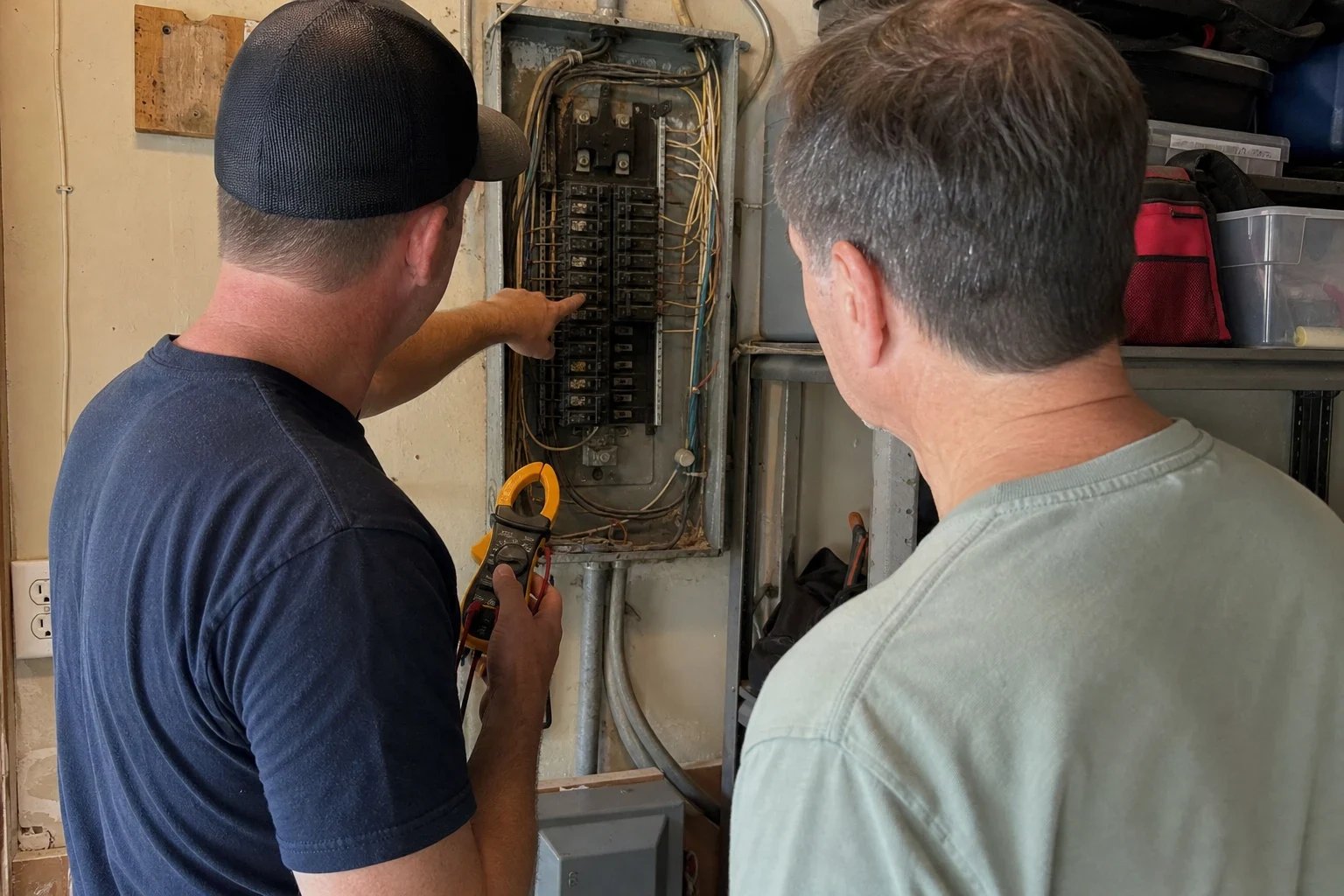
We look at your panel, meter, main breaker and the yard where the unit could sit. We take load readings, talk through which circuits matter, and give you a written scope.
- 2
Permit and fuel coordination
We pull the electrical permit as required by the local jurisdiction. For natural gas or propane units, the gas line is run by a gas contractor, and we coordinate timing so the unit is ready when they connect.
- 3
Install day
We set the pad, mount the transfer switch, run conduit and conductors, and torque every termination to spec. The power is off for part of the day while we tie into the panel, and we tell you when that window starts.
- 4
Testing and inspection
We simulate an outage, watch the transfer, load the generator and check voltage and frequency at the panel. After the inspector signs off, we show you the controller and the exercise schedule.
Generator Installation Questions
Do I need a whole-home generator or just essential circuits?
It depends on what you can't do without. Many homes are well served by covering the fridge, well or sump pump, a few lights and outlets, and one AC system with a load-shedding module. Our load calculation shows what each option can carry.
Can you connect a portable generator I already have?
In most cases. We mount a weatherproof inlet on the outside wall and pair it with an interlock kit or a manual transfer switch matched to the generator's output rating. Starting the generator and moving the switch stays your job, but the connection no longer depends on a cord through a window.
Do you pull the permit?
Yes. We pull the electrical permit and schedule the inspection as required by the local jurisdiction, in Cleburne and nearby towns like Burleson and Joshua. The gas connection goes through its own permit and inspection.
How long does the install take?
Once the permit is issued and the gas work is scheduled, the electrical installation is typically one to two days on site. Final inspection timing depends on the jurisdiction.
Where should the generator go?
Close enough to the panel and gas meter to keep runs short, but far enough from windows, doors and vents to meet the manufacturer's exhaust clearances. We also leave room to open the enclosure for service.
Get Backup Power Wired Right the First Time
We'll look at your panel and yard, size the system to your loads, and explain the transfer switch options in plain terms. Pairing the install with Surge Protection is worth asking about while we're there.