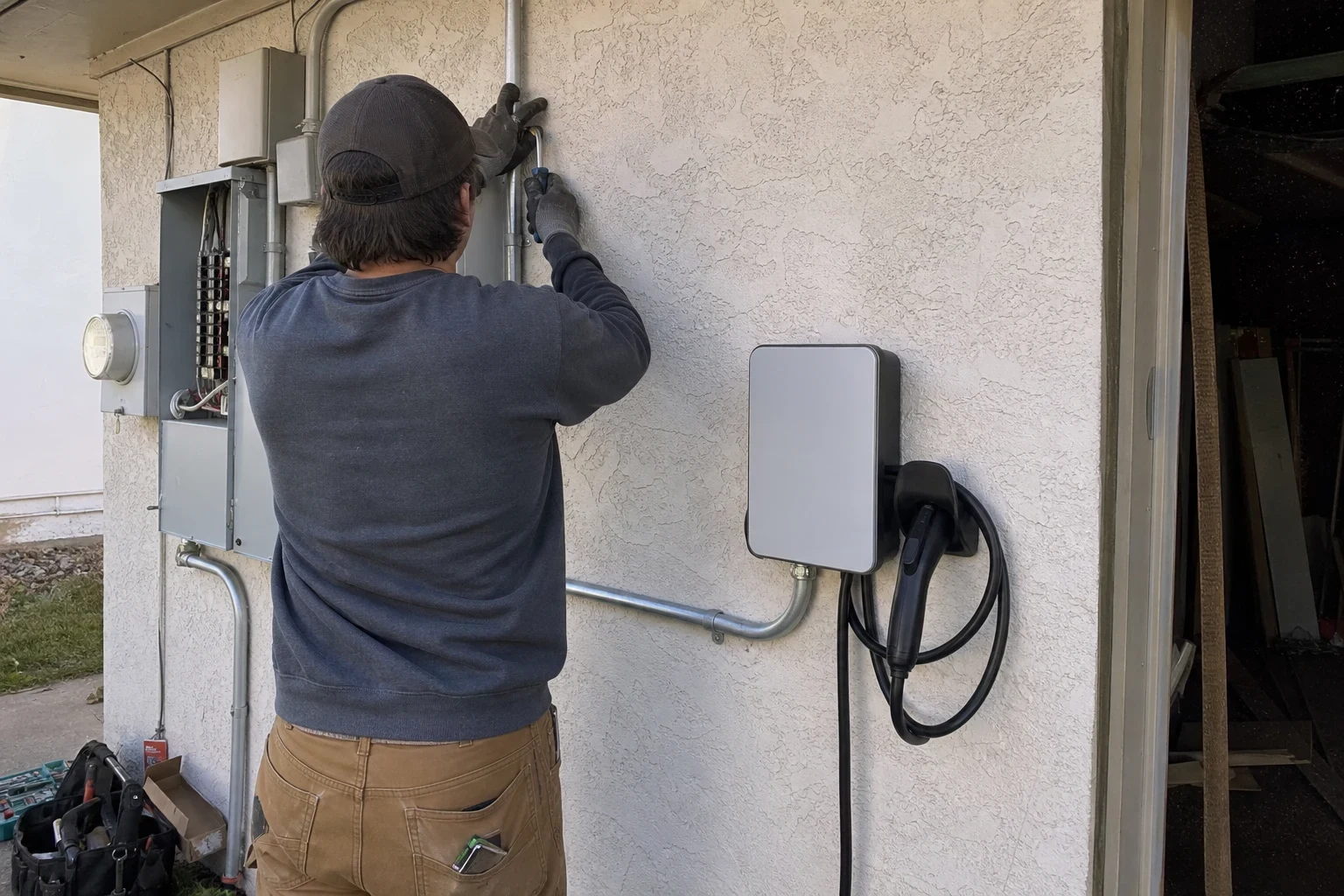
ServicesEV Charger Installation
EV Charger Installation in Cleburne
Your car will pull steady current for hours every night, so the circuit feeding it has to be built for that kind of work. We confirm your panel has room, size the copper and breaker to the charger and torque each connection to spec, so the circuit stays cool for years.
A Charger Circuit Works Harder Than Almost Anything in Your Home
A dryer cycle is over in about an hour. A Level 2 charger may hold near its maximum output for most of the night, and then do it again the next evening. The electrical code classifies any draw lasting three hours or more as continuous, and it asks for wire and overcurrent protection sized at 125 percent of the charger's rated current. That is why a 48-amp charger gets a 60-amp circuit, not a 50.
Most charger problems we see trace back to small details: a terminal screw left a quarter turn loose, an inexpensive receptacle with thin contacts, aluminum wire landed on a lug not rated for it. Under a long, steady load those details turn into heat, then discolored plastic, then a melted plug. We build the circuit so none of that has room to start.
We install chargers in garages, carports and on exterior walls for homeowners in Cleburne, Joshua, Burleson and nearby towns.
What Your Installation Includes
Load calculation on your panel
We add up what your home already draws, including the AC, range, dryer and water heater, and confirm there is room for the charger. If there is not, we explain your options, from a smaller charger setting to load management or a panel upgrade.
Correctly sized copper and breaker
We match the conductor gauge and breaker to the charger's continuous rating and the length of the run. Long runs get upsized wire to limit voltage drop.
Hardwired unit or NEMA 14-50 outlet
Hardwiring removes the plug connection, which is the most common failure point. If you want an outlet, we use an industrial-grade receptacle and the GFCI protection current code generally calls for.
Torqued terminations
Every lug and terminal is tightened with a torque driver to the manufacturer's spec, not by feel. That single step prevents most of the heat damage we get called to fix.
Protected wiring path
Exposed runs go in conduit, and outdoor installs get weather-rated fittings and a mounting height that keeps the cable off the ground.
Permit filed, inspector booked
We file for whatever permit your local jurisdiction requires and set up the inspector's visit for you. Where the utility needs to be involved, we handle that coordination too.
Signs Your Charging Setup Needs an Electrician
You just bought an EV or a plug-in hybrid
A standard household receptacle adds only a few miles of range for each hour plugged in, which may not cover a long round trip by the next morning. A dedicated 240-volt circuit puts back a typical day's driving while you sleep.
The plug or outlet feels warm
Warmth at a 14-50 receptacle or charger plug means resistance at a loose or worn connection. Stop using it and have it checked before the plastic starts to brown.
The breaker trips partway through a charge
That usually points to an undersized circuit, a weak breaker or a charger set higher than the wiring allows.
You are charging off a dryer outlet or extension cord
Adapters and cords were never meant for hours of continuous draw. They are a common source of melted connections.
Your charger is outside in full sun
In a Texas summer an exposed enclosure and its wiring run hot, which shortens their life. Relocating or shading the unit and checking the wire's temperature rating can help.
How the Job Goes
- 1
Service visit and panel check
We look at your panel, its labeling and spare spaces, the route to your parking spot and the charger you plan to use. You get a clear scope before any work is scheduled.
- 2
Permit and planning
We file the permit as required and confirm the wire size, breaker and mounting location with you.
- 3
Installation day
We shut off power, install the breaker, run conduit and conductor, then mount the charger or outlet. Most single-car installs fit in one working day.
- 4
Testing and setup
We verify voltage under load, confirm the charger's amp setting matches the circuit and show you the settings. The inspector then signs off on the work.
What Moves the Cost of a Charger Install
Every install is priced after we see your panel and the path the wire has to take. Two homes with the same charger can land far apart. These are the parts that make the difference.
- Distance from panel to charger
- Copper is priced by the foot, and long runs often need a heavier gauge. A charger on the wall behind the panel costs far less than one across a detached garage.
- Panel capacity
- If the load calculation shows no headroom, the job may need load management or a panel upgrade before the charger goes in.
- Charger amperage
- A 40-amp setting and a 48-amp setting call for different breakers and wire sizes.
- Route and finish
- Fishing wire through finished walls, attic runs, trenching or surface conduit outside each take different time and materials.
- Permit requirements
- Permit fees and inspection steps vary by jurisdiction and are part of the scope.
EV Charger Questions
Something not covered here? (682) 399-7732
Should I hardwire my charger or use a plug-in outlet?
Hardwiring is the more durable choice because it removes the plug and receptacle, where most heat problems start. It also allows a 48-amp setting on a 60-amp circuit. A 14-50 outlet makes sense if you might take the charger with you or switch brands, as long as it is a heavy-duty receptacle with GFCI protection.
Will my panel handle a Level 2 charger?
Many will, but we confirm it with a load calculation rather than guessing from the main breaker size. If capacity is tight, a lower charger setting or a load management device can often avoid a panel upgrade.
Do you pull a permit for charger installs?
Yes. We pull the permit and arrange the inspection as required by your local jurisdiction. That record matters for your insurance and when you sell your home.
Can you install the charger outside instead of in the garage?
Yes. We use an outdoor-rated charger or enclosure, weatherproof conduit and fittings, and mount it where the cable reaches your charge port without dragging on the driveway.
How long does an installation take?
Most single-charger jobs take one day once the permit is in hand. Long runs, finished walls or panel work can add time, and we tell you that at the service visit.
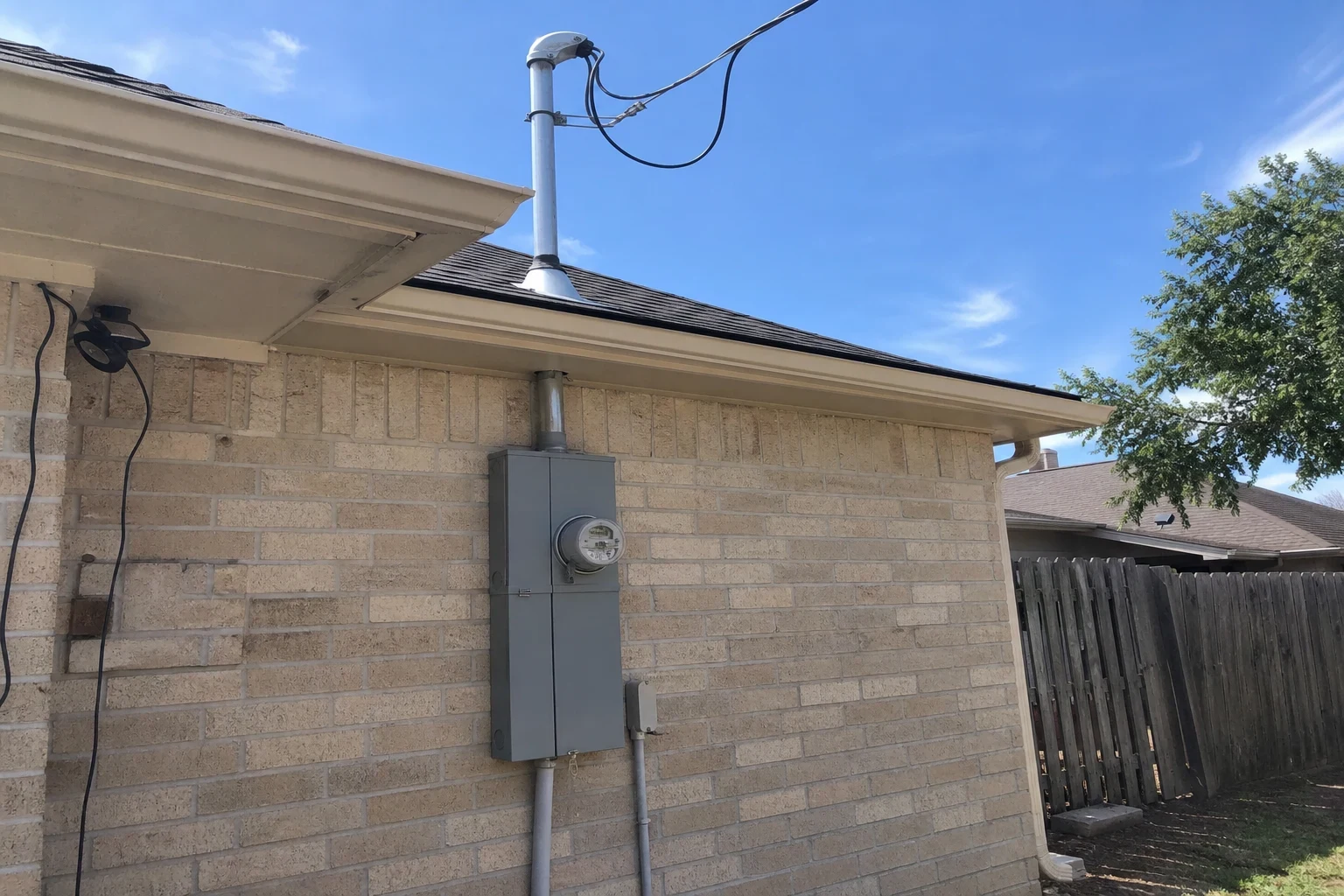
Get a Charger Circuit Built for Nightly Use
We start by checking your panel and the route to your parking spot, then lay out the wire, breaker and mounting plan in plain terms.