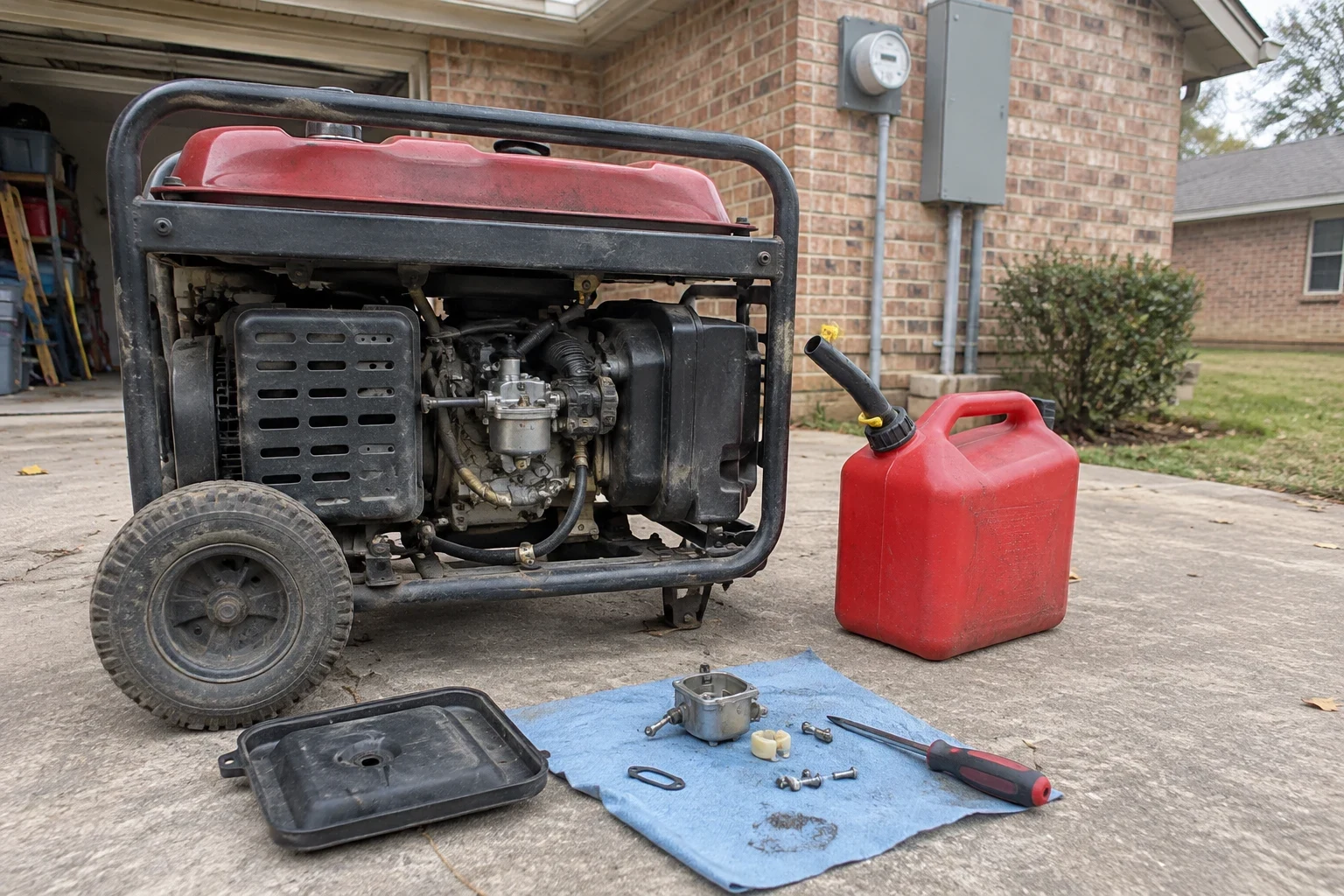
What Causes a Generator to Only Run on Choke in Cleburne?
The choke is a cold-start tool, so a generator that needs it to stay running is telling you something specific about its fuel system.
What causes a generator to only run on choke?
A generator that only runs on choke is running lean: too much air, not enough fuel. The usual cause is a partly clogged carburetor jet from old fuel varnish. Air leaks at the intake gasket, a blocked fuel cap vent, or a restricted fuel filter can do the same thing. Book a service visit at (682) 399-7732.
Why the choke keeps a lean engine alive
The choke is a plate at the mouth of the carburetor. When you close it, it restricts incoming air, which raises the vacuum inside the carburetor and pulls extra fuel through the jets. That rich mixture helps a cold engine fire, and normally you open the choke within a minute once the engine warms.
If the engine stalls or surges as soon as the choke opens, the carburetor is not delivering enough fuel on its own. Closing the choke is masking the shortage by forcing more fuel through a passage that has gotten too small. The engine is telling you the mixture is lean, and the job is to find out where fuel is being lost or air is getting in.
The most common causes we find
Most of the time this traces back to fuel that sat too long. Gasoline with ethanol starts breaking down within weeks, and the lighter parts evaporate out of the carburetor bowl, leaving a sticky varnish behind. The pilot jet, which handles idle and light loads, has an opening smaller than a pinhole, so a thin film of varnish is enough to choke it off. Portable generators that sit in a hot garage through a long Texas summer between storm outages are prime candidates.
The other causes are less common but worth checking in order, because each one produces the same symptom:
- Clogged pilot or main jet from varnished or water-contaminated fuel
- A cracked or shrunken gasket between the carburetor and intake, letting in unmetered air
- A fuel cap vent that is plugged, creating a vacuum in the tank that slows fuel flow
- A dirty inline fuel filter or a gummed-up screen in the fuel shutoff valve
- A sticking float or needle valve that keeps the bowl from filling to the right level
- On propane or natural gas standby units, a weak supply pressure or a failing regulator
What you can safely check before calling
Start with the simple things. Make sure the fuel shutoff valve is fully open, not halfway. Loosen the fuel cap a quarter turn and try running without choke; if the engine smooths out, the cap vent is blocked. Look at the fuel itself. If it smells sour, looks darker than fresh gas, or has been in the tank more than a month or two without stabilizer, drain it and refill with fresh fuel.
A dirty air filter is not the cause here. A clogged air filter actually makes the mixture richer, which is the opposite problem, so replacing it will not fix a lean engine. Many owners swap the air filter first and are surprised when nothing changes.
Run any test outdoors, well away from windows, doors and the garage. Never run a generator inside an attached garage, even with the door open, because carbon monoxide builds up fast and has no smell.
How we repair it so the problem stays fixed
We drain the tank and the carburetor bowl, then pull the carburetor and take it apart. Spraying cleaner through the intake rarely clears a varnished pilot jet, so we remove the jets, soak or ultrasonically clean the body, and push a properly sized wire or compressed air through each passage. We check the float height and the needle seat, because a worn needle can let the bowl run low under load.
The small details decide whether the repair lasts. We replace the bowl gasket and the intake gasket instead of reusing old ones that have taken a set, and we tighten the carburetor mounting nuts evenly so the new gasket seals all the way around. A carburetor that is pitted or corroded inside is often better replaced than cleaned again, and we tell you which one we found and why.
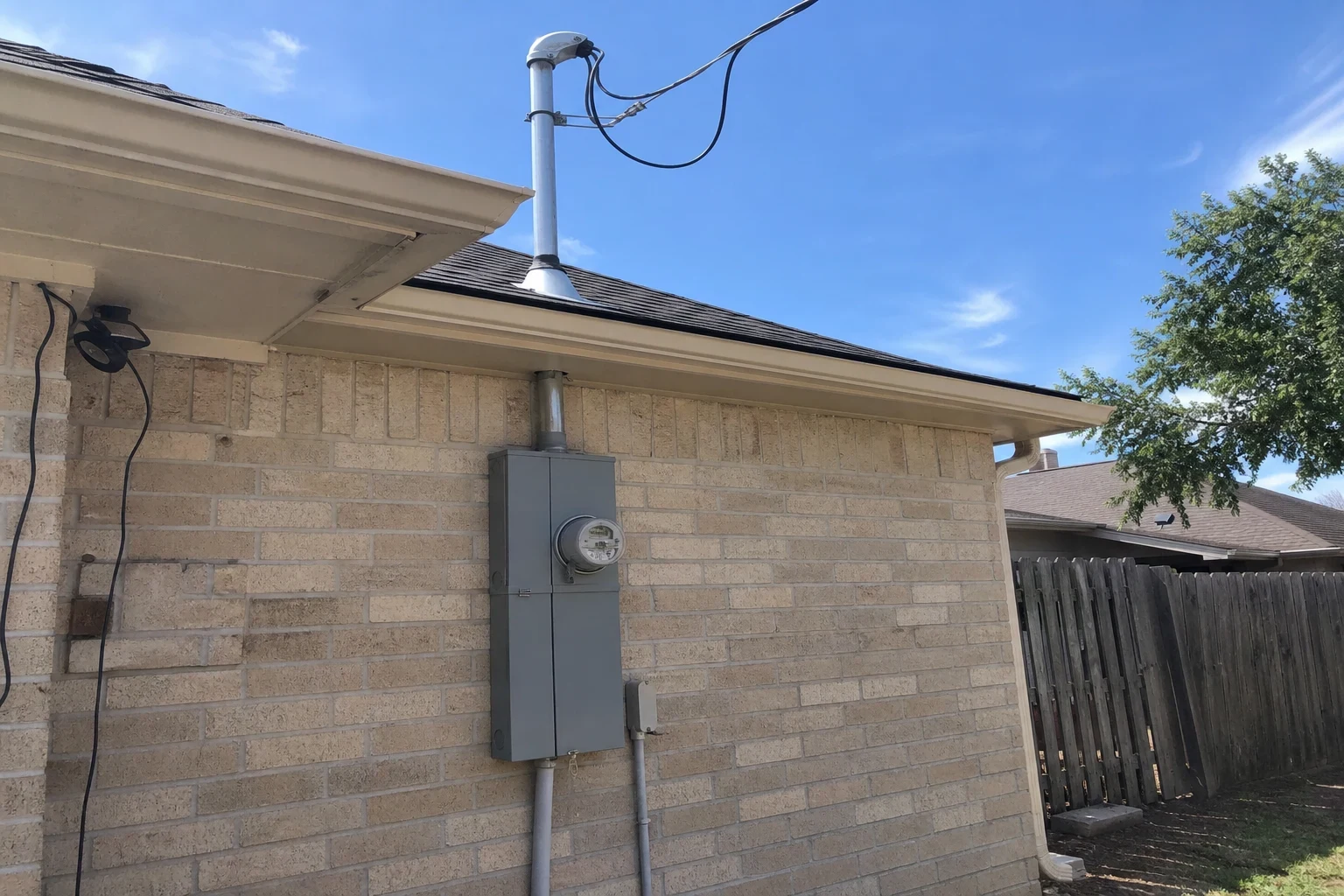
Before we leave, we run the generator under load with the choke fully open and watch for surging. If the unit feeds your home through an inlet box or transfer switch, we also check those connections, since a loose lug there can look like an engine problem when the lights flicker.
Keeping it from coming back
Fuel management is most of the prevention. A generator that runs fine after the next storm is one that was stored with clean fuel and a dry or stabilized carburetor.
For standby units, scheduled exercise runs and an annual service catch fuel and battery issues before an outage does. Our generator service and repair work covers both portable and permanently installed units.
- Add fuel stabilizer every time you fill, not just before storage
- Use ethanol-free gas when you can find it for small engines
- Close the fuel valve and let the engine run until it stalls before storing it, or drain the bowl
- Start it and run it under some load for 15 to 20 minutes about once a month
More questions about generators that need the choke
Something not covered here? (682) 399-7732
Can I keep running my generator on choke?
It will run, but the rich mixture fouls the spark plug, builds carbon in the cylinder and burns more fuel. Under load it often surges or stalls, which is hard on the appliances it feeds.
Will a fuel additive clear a clogged jet?
A cleaning additive can sometimes loosen light deposits, but it has to reach the jet to work, and a fully blocked pilot jet usually lets almost nothing through. Most varnish clogs need the carburetor taken apart and cleaned.
Why does my generator run on choke only after it sat over the summer?
Heat speeds up fuel breakdown, so gas left in the bowl through the hot months turns to varnish faster. Draining or stabilizing the fuel before long storage prevents most of these clogs.
Do you work on standby generators as well as portables?
Yes. On standby units we check gas supply pressure, the regulator and the transfer switch along with the engine itself, since a lean condition can start upstream of the generator.
Get your generator running without the choke
When you call, we book a service visit to find out whether the cause is varnish, an air leak or a fuel supply problem, then fix it with new gaskets and a load test before we leave.